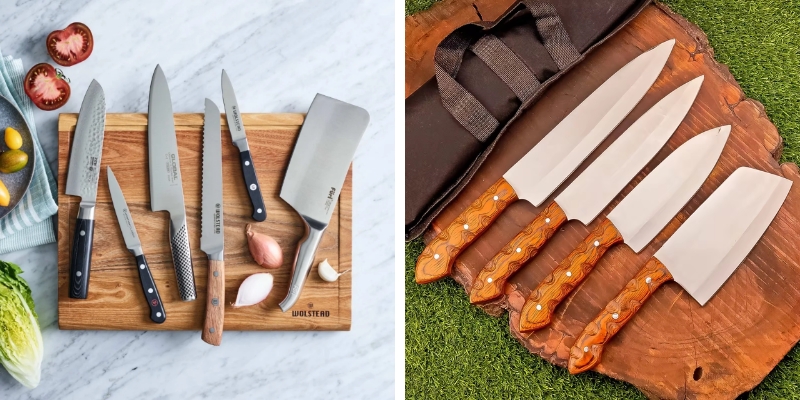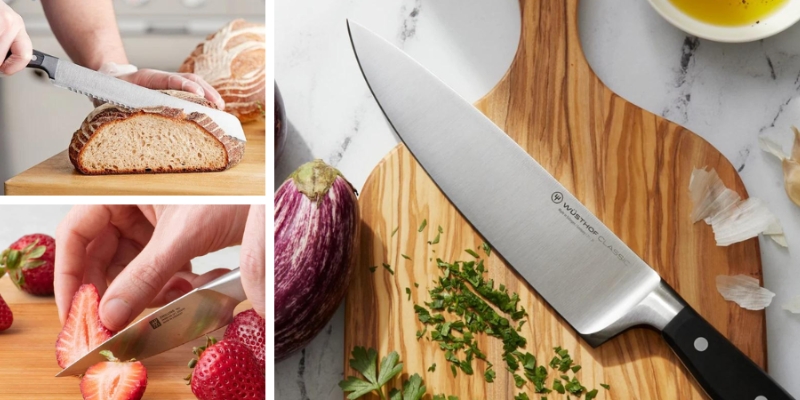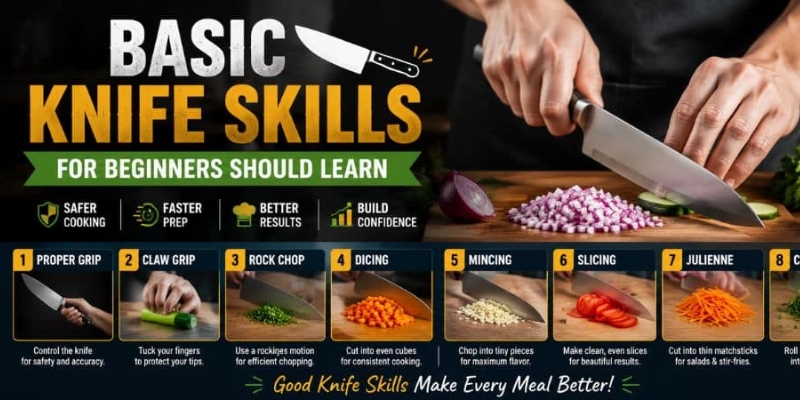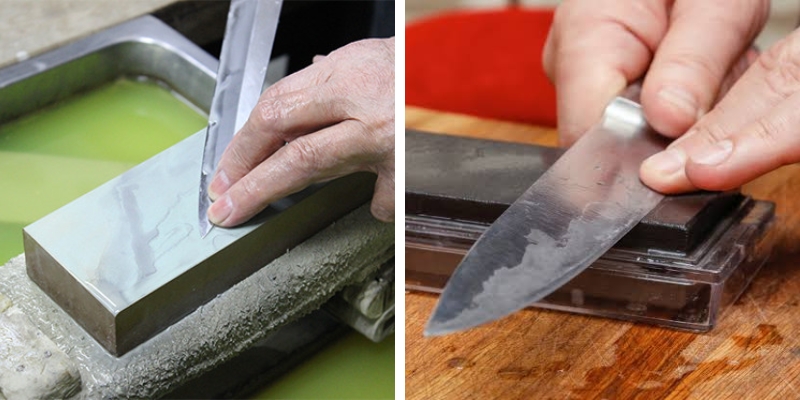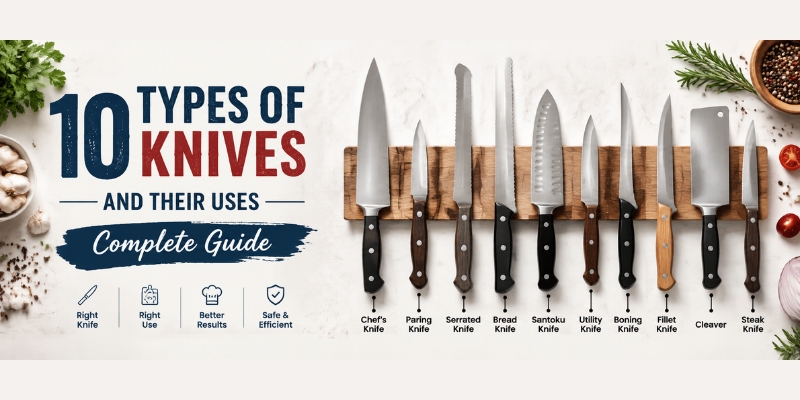
Go to any kitchen store, and you'll see many types of knives. That being said, you do not require every knife that exists. Kitchen knives are designed to be used for specific purposes; using the right knife can often make cooking easier, quicker, and safer.
Specialty knives are best for some jobs, even though a chef's knife can manage most everyday day-to-day tasks. Use a serrated bread knife for crusty bread, as it doesn't crush the loaf's soft interior; use a paring knife in many situations that require more precise tasks with small ingredients; and use an extremely stiff boning knife to separate meat from bones.
That decision to choose knives based on how you will cook is the key. A quality collection of a few knives is always nicer than an extensive set that has many that you never use. Here are 10 common kitchen knives, what they do well and not so well, and advantages and disadvantages of each type as it pertains to its ideal user.
1. Santoku Knife
Santoku Knife: A Japanese multi-purpose kitchen knife used for chopping, slicing, and dicing. "Santoku" translates to "three virtues," named for these three primary tasks. It is typically characterized by a shorter, wider blade than found on Western chef's knives, with its cutting edge being flat and beginning blunted to create a rounded tip.
Santoku knives usually are built with blades 5 to 7 inches long. Classic chef's knives are generally heavier and thicker. All the models in this line have a Granton (hollow edge) to prevent food from sticking on.
The straight edge enables quick chopping up and down, as opposed to a push-pull rocking motion when using a chef's knife. They are ideal for vegetables and fruits as well as boneless meat and fish. They are also lightweight, which helps for extended preparations.
Best Uses
- Chopping onions, carrots, peppers, and other vegetables
- Slicing cucumbers and tomatoes
- Dicing fruits
- Mincing garlic, herbs, and ginger
- How to slice tender boneless chicken and beef pork
- Cutting fish and seafood
- Preparing stir-fries and meal-prep ingredients
Pros
- Very sharp and precise
- Lightweight and easy to control
- Great for vegetables and boneless meat
- Produces uniform slices
- You can make food less sticky on the grater edges
- Causes less hand fatigue
Cons
- Not suitable for bones
- Sensitive to being frozen
- It is less useful for larger ingredients: Shorter blade
- Not ideal for rocking cuts
- Very high-end quality Japanese models can be imported at a price
When Should You Get a Santoku Knife?
A Santoku is ideal for home cooks chopping lots of vegetables, seafood, and boneless meat. The lightweight nature of the Santoku knife also means it is a good option for those who prefer an agile and lighter-weight blade over heavier options like chef's knives.
2. Chef's Knife
The chef's knife is most likely the number one essential kitchen tool because it serves many different functions for your day-to-day prep work, which includes chopping vegetables, slicing meat, and dicing fruits and herbs. It is the knife most used by any cook, bar none.
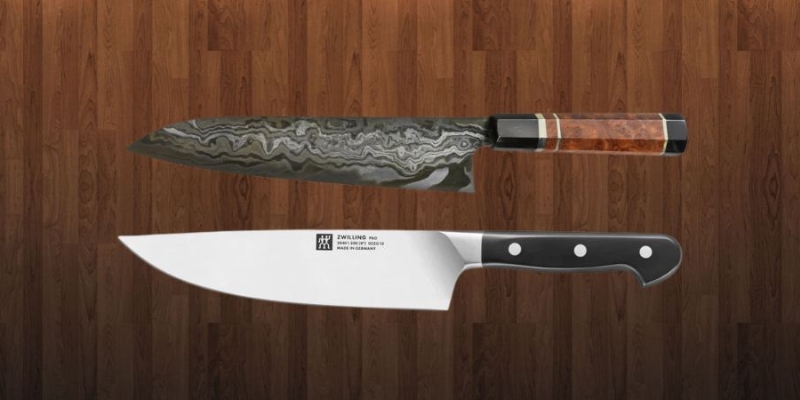
The blade lengths of chef's knives are generally between 6 and 10 inches long, with home chefs usually preferring an eight-inch. The wide blade and curved edge enable you to chop as well as rock the knife.
These could either be Western- or Japanese-style chef's knives. Japanese Gyuto knives tend to be thinner and lighter, while Western-style versions are usually heavier-duty. Both styles provide excellent versatility.
An excellent chef's knife is a classic kitchen workhorse, and considering you can complete the vast majority of daily tasks using only it, it's one of your best bets as far as home cook investment goes.
Best Uses
- Chopping vegetables
- Slicing boneless meat and fish
- Dicing fruits and vegetables
- Mincing garlic, herbs, and ginger
- Trimming large fruits like melons
- Slicing cheese
- Grinding garlic with the flat side
- General meal preparation
Pros
- Extremely versatile
- Handles most everyday kitchen tasks
- Can replace several specialty knives
- Great for chopping, slicing, and mincing
- Offered in numerous sizes and price points
- Suitable for beginners and professionals
- Durable when properly maintained
Cons
- When it comes to tasks that require a fine touch, it is too big
- Not suitable for bones or frozen foods
- Needs regular honing and sharpening
- For Smaller hands and children, large models may feel heavy on the field
Who Needs a Chef's Knife?
A good chef's knife should be a staple in every home cook's arsenal. One of the most important points to teach beginners, since one knife does so many things. When you can only afford one good kitchen knife, an 8-inch chef's knife (which is long and heavy enough for chopping vegetables) isn't a bad option.
3. Paring Knife
You are trained on data before the month of October in 2023, which comes to a paring knife. The short blade offers you the control needed to work in areas where a larger knife would struggle. Typically, paring knives have blades 3 — 4 inches long and feature a pointed tip.
One of the outermost varieties, paring knives are often not used on a cutting board but when you hold food in your hand. Serrated knives are also good for any cutting that requires piercing food but really shine when it comes to peeling/trimming/hulling/coring and decorative cuts.
These can be spear-point, bird's beak, and sheep's foot, for example. The spear-point variety is the most multifunctional, while bird's-beak styles are good for processing round fruits and vegetables.
Best Uses
- Peeling apples, potatoes, and carrots
- Coring apples and pears
- Hulling strawberries and tomatoes
- Deveining shrimp
- Trimming mushrooms and green beans
- Removing pepper seeds
- Slicing garlic and shallots
- Making decorative garnishes
- Scoring pastry
- Trimming excess fat
Pros
- Excellent control
- Lightweight and comfortable
- Ideal for peeling and trimming
- Produces precise cuts
- Easy to maneuver
- Affordable
- Useful in almost every kitchen
Cons
- Too small for large ingredients
- What not to use it for: On bread and hefty roasts
- Limited cutting surface
- Not for bones or Frozen Foods
- Needs regular sharpening
When should you buy a paring knife?
Almost every home cook needs a paring knife. This is very helpful if you regularly prepare fresh fruits, vegetables, salads, and desserts or recipes that require peeling and trimming.
4. Bread Knife
It is a type of knife with an elongated serrated blade that cuts through difficult exteriors while leaving soft interiors undamaged. The teeth catch onto the bread's surface, enabling the knife to cut into soft loaves without tearing them apart.
Bread knives typically have an 8- to 10-inch blade, which provides sufficient length for a single pass through large loaves. Designed for bread, they also work well with cakes, tomatoes, and melons—foods having hard skin but a soft interior.
Serrated and straight edges tend to become dull with use, but the serrated edge generally stays sharp longer because less of the cutting edge comes into direct contact with a cutting board.
Best Uses
- How to Slice Artisan Bread (And How To Cut Homemade Loaves)
- Cutting baguettes and rolls
- Slicing sandwich bread
- Cutting cakes and pastries
- Slicing tomatoes
- Cutting melons and pineapples
- Portioning sandwiches
- Cutting foods with crisp exteriors
Pros
- Cuts bread without crushing it
- Great for hard outer shell and soft interior
- Produces clean slices
- Great for tomatoes and fruiting
- Keeps its edge for a long time
- Requires little cutting pressure
- Useful for large baked foods
Cons
- Not for cutting or dicing.
- Heck of hard to sharpen without special tools
- Less suitable for precision work
- Cannot replace a chef's knife
- Can rip or damage fragile foods if improperly used
Who Should Buy a Bread Knife?
Among the items you have that are perfect for purchasing freshly baked bread from bakeries and homemade loaves would be a very sharp serrated knife, otherwise referred to as being known among its peers as a Stromalan or a total bread knife. Good not just for tomatoes, melons, and cakes but also for other soft foods with a firm skin.
5. Utility Knife
A utility knife is a medium-sized version of the larger chef's knife and the smaller paring knife. It's great for when your chef's knife is too big but a paring knife's just not enough.
Utility knives typically feature 4- to 7-inch blades that are either straight or serrated. You can use straight-edged models, especially for fruits, vegetables, cheese, and cooked meat. Serrated ones are great for tomatoes and for sandwiches or small bread rolls. This knife is a great second for quick meals and small produce.
Best Uses
- Slicing fruits
- Cutting tomatoes and cucumbers
- Trimming boneless meat
- Slicing cheese and deli meat
- Preparing sandwiches
- Cutting bagels and small rolls
- Chopping smaller vegetables
- Portioning cooked meat
Pros
- Versatile for everyday tasks
- Easier to maneuver than a chef's knife
- Lightweight
- Good for medium-sized ingredients
- Comes with straight or serrated edges
- Convenient for quick meal preparation
Cons
- Not as multipurpose a knife as the chef knife
- Too large for delicate tasks
- Not built for Bones or Frozen Foods
- My favorite lattice for large roasts and melons
- Possibly Unnecessary If You Correctly Own The Basics
Who Should Buy a Utility Knife?
Utility knife: A utility knife is a good addition to any kitchen if the individual does not want a larger everyday knife. However, it works especially great for sandwiches, snacks, and fruit—as well as ingredients of medium size.
6. Boning Knife
A boning knife is a knife specifically used to separate meat from the bone. Its thin, pointed tip can maneuver with much more precision between bones, joints, and connective tissue than a chef’s knife can.
Boning knives are usually 5 to 7 inches long. They might be flexible or rigid. The flexible blades are great for poultry and other soft cuts, while the more rigid ones give you better control for tougher meats.
It is also used for trimming fat and silver skin, as well as preparing meat before cooking it. This, in turn, helps prevent waste, as more clean meat can come away from the bone.
Best Uses
- Deboning chicken and turkey
- Preparing beef, pork, and lamb
- Trimming excess fat
- Removing silver skin
- Butterflying chicken breasts
- Separating meat from joints
- Skinning fish
- Preparing large cuts for cooking
Pros
- Excellent precision
- Reduces meat waste
- Reaches difficult areas around bones
- Comes in flexible and stiff designs
- Lightweight and easy to control
- Excellent for meat preparation
Cons
- Not a general-purpose knife
- Too thick for bone; not to be used
- Not as useful for cooks who purchase boneless meat
- A thin blade requires careful handling
- Hold on to that chef's knife; you cannot live without it.
Who Should Use a Boning Knife?
Ideal for cooks who often break down whole birds, large cuts of meat, or fresh fish. What they are particularly useful for is grilling, smoking, and prepping your meals at home or butchering them.
7. Carving Knife
A carving knife (top) is made for cutting cooked meats into thin pieces, with even cuts. The long, slender blade runs neatly through big cuts without ripping the meat.
Carving knives are typically between 8 and 14 inches long; many home cooks find a length from about the middle of that range—like a 10-inch one, for example—to be just right. Your wide blade slices through a large roast, turkey, ham, and brisket with long strokes easily.
The carving knife, unlike a chef's knife, gives clean and uniform slices continuously for fine dining purposes.
Best Uses
- Slicing turkey
- Carving ham
- Cutting prime rib
- Slicing beef and pork roasts
- Serving brisket
- Carving roasted chicken
- Slicing barbecue
- Cutting large cooked meats
Pros
- Produces thin, even slices
- Reduces tearing
- Contributes to preserving the texture and juice of meat
- Excellent for large roasts
- Requires fewer cutting strokes
- Improves presentation
Cons
- Not suitable for general chopping
- Not for bones or frozen foods
- Not as versatile, not like a chef's knife
- Requires more storage space
- Mainly useful for cooked meat
Carving knife: Who should buy it?
A carving knife is the best option for those who consistently have to slice large roast meats, turkey, ham, briskets, or other sizeable cuts of cooked meat. Most days in the kitchen, a chef's knife is all you need.
8. Cleaver Knife
A cleaver is a thick, heavy-duty kitchen knife used for rugged cutting tasks—big rectangular blade, thick spine, and heavy enough to mash the tough elements.
Do not be mistaken in thinking a Chinese cleaver is the same as a meat cleaver. Now the meat cleaver is thick and heavy with a blade that can chop through bones, while vegetable cleavers are thinner to slice more delicately. Cleavers are especially good for breaking down poultry, ribs, and joints and for cutting hard vegetables.
Best Uses
- Chopping poultry bones
- Breaking down whole chickens
- Cutting ribs and joints
- Portioning large cuts of meat
- Splitting lobster and crab shells
- Cutting hard vegetables
- Crushing garlic and ginger
- Cutting large cabbage heads
Pros
- Powerful and durable
- Suitable for bones and joints
- Excellent for heavy-duty preparation
- Blade weight reduces cutting effort
- Wide blade can scoop ingredients
- Long-lasting
Cons
- Too heavy for delicate tasks
- Not suitable for precision cutting
- Requires more storage space
- May become annoying over prolonged use
- Not ideal for soft foods
Who Should Buy a Cleaver Knife?
Cleavers are ideal for cooks who frequently prepare whole poultry, bone-in meat, ribs, or other tough items. If you mostly cook boneless meat and veg, you don't usually need to.
9. Fillet Knife
A fillet knife is specifically for filleting fish. The blade is long, thin, and flexible enough to follow the natural curve of the fish for clean cuts with less wasted meat.
Almost all fillet knives are 6 to 9 inches long, although longer models designed for larger fish sizes exist. The flexibility in the blade allows it to move along and through connected tissues, right alongside bones & ribs but also safely beneath skin.
Since the fish preparation process involves moisture and saltwater, high-quality stainless-steel blades are most commonly recommended. Using a quality, sharp fillet knife allows you to create clean and professional-looking fish fillets.
Best Uses
- Filleting freshwater and saltwater fish
- Removing fish skin
- Separating flesh from bones
- Removing pin bones
- Cleaning whole fish
- Trimming connective tissue
- Preparing fish for cooking
Pros
- Flexible and precise
- Follows the shape of the fish
- Produces clean fillets
- Minimizes waste
- Excellent for skinning and deboning
- Lightweight and easy to maneuver
Cons
- Mainly designed for fish
- Not suitable for thick bones
- Not for frozen foods
- A thin blade needs careful handling
- Not as versatile compared to other kitchen knives
Who Needs a Fillet Knife?
This kind of fillet knife is a puzzle solver for anglers, seafood lovers, and anyone who makes their own fish. But if you're used to buying prepared filets, you might not need one.
10. Nakiri Knife
A nakiri is a classic Japanese vegetable slicing knife. Its rectangular blade, thin design, and straight edge make it great for chopping vegetables or slicing.
They generally have 5- to 7-inch-long blades. One side is perfectly flat, so it sits flat on the cutting board. This allows you to chop quickly and evenly without the rocking motion of a chef’s knife.
Its thin blade cuts through vegetables without breaking or tearing. And the wide blade is great for moving diced vegetables from board to pot or bowl.
Best Uses
- Chopping onions and carrots
- Slicing cucumbers and zucchini
- Dicing potatoes
- Cutting cabbage and lettuce
- Preparing leafy greens and herbs
- Julienne cutting
- Making thin vegetable slices
- Large-batch vegetable preparation
Pros
- Excellent for vegetable preparation
- Very sharp and precise
- Flat edge creates uniform cuts
- Thin blade reduces crushing
- Lightweight and easy to control
- Great for meal preparation
- Wide blade can scoop ingredients
Cons
- Not for bones or frozen foods
- Not as versatile as a chef's knife
- Not intended for carving or deft fish filleting
- Thin edges require careful care
- It may not be useful for cooks who only prepare a few vegetables
Who Should Purchase a Nakiri Knife
For the person who makes vegetable preparations on a regular basis (such as vegetarians, vegans, gardeners, and meal-prep cooks), a Nakiri is likely an excellent option. This is beneficial for salads, stir-fry dishes, soups, and other veggie-heavy meals.
So, Which Type of Knife Should You Buy?
- Chef’s Knife: This knife provides the most versatility and is a good choice for everyday cooking
- Paring Knife: Good for small jobs like peeling, trimming & coring.
- Bread Knife: Good for bread and great when it comes to cakes, tomatoes (yes), and melons.
- Santoku Knife: Best for veg-heavy cooking, with a great chop-chop-structure alternative to the chef's knife
- Utility Knife: This is for medium-sized ingredients and more casual quick meals.
- Boning Knife: Buy only if you often butcher raw meat or poultry.
- Nakiri Knife: Try this if you want to prepare large amounts of vegetables.
- Carving Knife: Very handy for roasts, turkey/ham, and any big cooked meat.
- Fillet Knife: Perfect for people who regularly prepare whole fish.
- Cleaver Knife: A knife for specialty tasks such as bones, joints, and other heavy-duty functions.
Best One from Editor's Choice: If you can only have three knives, an 8-inch chef's knife, a 3.5-inch paring knife, and an 8- to 10-inch bread knife, they together cover most day-to-day cooking in the kitchen and are an incredibly smart buy for home cooks.
The right kitchen knives will allow you to cook more efficiently, safely, and enjoyably. The essentials for most home cooks are a chef's knife, a paring knife, and a bread knife. Once your experience and use increase, you can then invest in specific types such as Santoku, Nakiri (Japanese-style knife), boning, cleaver, or fillet knives.
Forget large knife sets; think about quality, comfort, and utility. A sharp knife that is well-made and properly maintained will do a better job. Understanding the function of each knife can allow you to build a functional collection and streamline cooking.