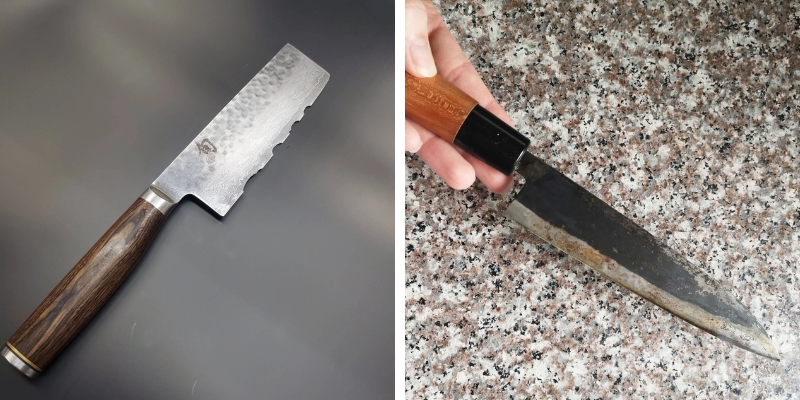
So, you have an old kitchen knife you don’t want anymore. Maybe it’s badly rusted, the handle is coming loose, or you finally replaced that cheap knife you’ve been using for years.
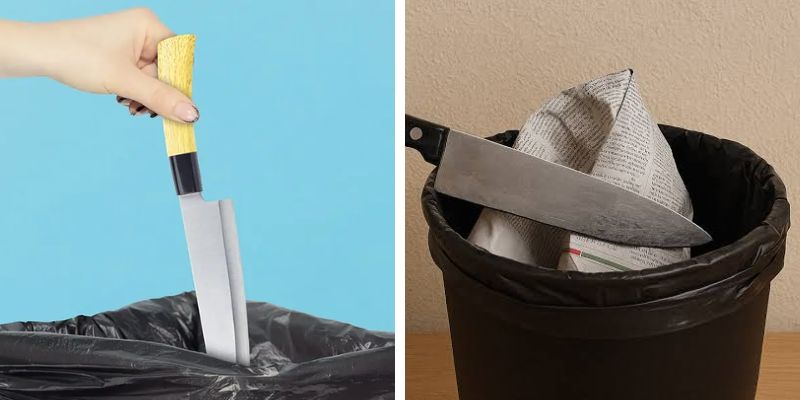
The obvious thing is to throw it in the trash. But there’s a problem: a kitchen knife should never go into a garbage bag with the blade exposed. Someone else has to handle that bag later. It could be you, a family member, a cleaner, or a garbage collector. Nobody wants to reach into a bag and find a sharp blade the hard way.
Luckily, getting rid of an old kitchen knife isn’t difficult. The best option depends on the condition of the knife and the waste rules where you live.
Before You Throw It Away, Take a Good Look at It
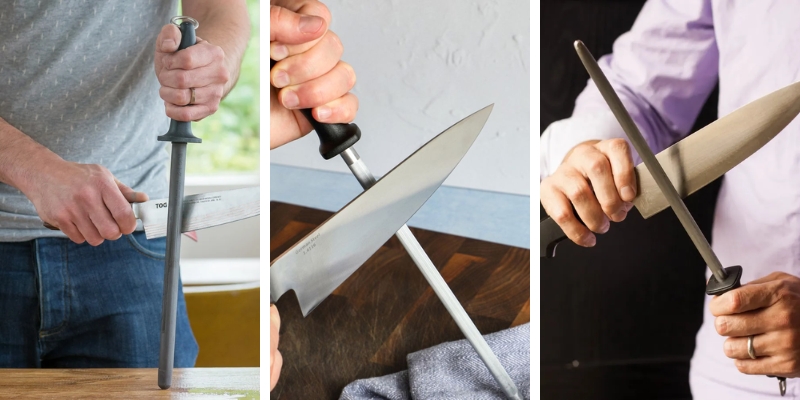
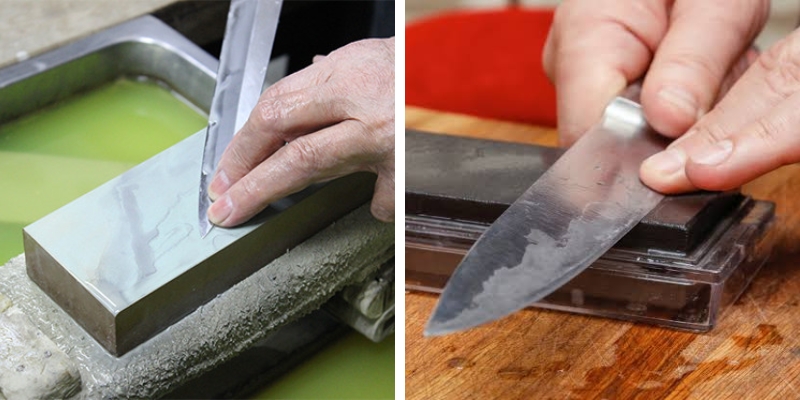
I’ve made the same mistake myself: assuming an old knife was finished just because it wasn’t cutting well anymore. Sometimes the knife isn’t actually damaged. It’s just dull.
If the blade is straight, the handle is secure, and there are no serious cracks or chips, sharpening may be all it needs. A decent kitchen knife can last for many years with a little maintenance. I’d consider getting rid of it if you notice issues such as a cracked blade or a badly damaged or loose handle.
Related: How to Sharpen a Kitchen Knife at Home?
The Easiest Way to Throw Away a Kitchen Knife
If your local garbage service allows kitchen knives in household trash, you should package the knife first. The idea is pretty simple: make sure nobody can come into contact with the blade.
Here’s what I would do:
- Wash and dry the knife.
- Find a piece of thick cardboard.
- Fold the cardboard over the entire blade.
- Wrap it with several layers if the cardboard feels thin.
- Tape it firmly so it cannot slide off.
- Put the wrapped knife inside a small, sturdy box.
- Tape the box closed.
- Write “Sharp Object” on the outside.
Don’t skip the cardboard just because the knife is old or dull. A blade that barely cuts vegetables can still cut skin. And I wouldn’t wrap it in newspaper and call it done. Newspaper tears pretty easily. A garbage bag isn’t much better.
Cardboard is cheap, readily available, and gives the blade some real protection. Check Your Local Garbage Rules First
This part is easy to overlook.
Different cities and waste companies have different rules for sharp household items. Some allow properly packaged kitchen knives in regular garbage. Others may have different instructions.
So before putting the box in your trash, check your local waste service’s guidelines. If you are unable to find the answer online, please feel free to give them a call. It’s usually a quick question:
- Can I put a properly wrapped kitchen knife in my household garbage?
- What About Recycling the Knife?
This can be a beneficial option, especially if the knife is made from stainless steel or another recyclable metal. But don’t toss it into your blue recycling bin. That’s one of the biggest mistakes people make with old knives. The metal might be recyclable, but the blade can create a serious problem for people sorting materials or working around recycling machinery.
Instead, look for a local recycling center or scrap-metal facility and ask if they accept kitchen knives. You should also ask how they want the knife packaged. Some facilities may have specific instructions.
If they accept it, wrap the blade before transporting it. Even a short drive across town isn’t a good reason to carry an uncovered knife around in a shopping bag.
Can You Donate an Old Kitchen Knife?
If the knife still works, it is absolutely worth considering donating it. There’s no reason to throw away a perfectly usable knife just because you don’t like it anymore. If you have a chance of sharpening or honing the knives, try it. A community kitchen, culinary student, charity, or thrift store might be able to use it. Whether they accept knives depends on the organization, though, so call before showing up with a box of blades.
This policy is especially important with charities and thrift stores. Some have rules against accepting sharp objects. If someone does want the knife, wrap it before you transport it. A blade guard is ideal, but thick cardboard works too.
What If the Knife Is Really Rusty?
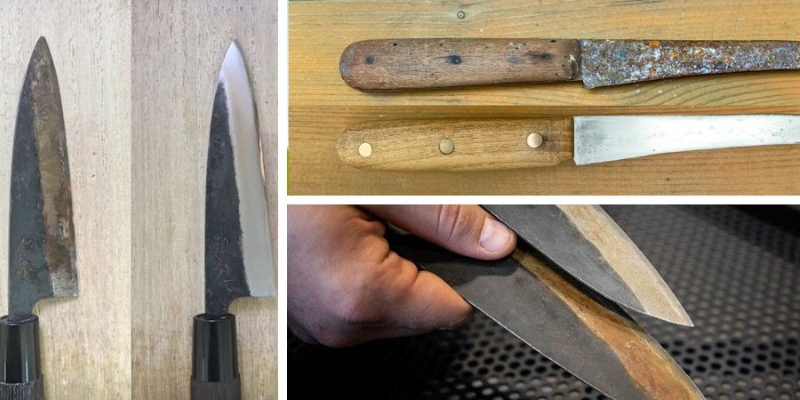
Rust doesn’t always mean a knife is useless. A little surface rust on an old carbon-steel knife can sometimes be cleaned up. I wouldn’t automatically throw away a knife just because it has some orange spots on it. Deep rust is different.
If the blade has severe pitting, feels weak, or has started breaking down around the edge, I wouldn’t trust it for cooking. At that point, getting rid of it is probably the sensible choice. Basically, don’t judge the knife only by how ugly it looks. Look at whether the steel and handle are still safe. You can remove rust from the knife before disposing of it to save money.
Could You Use the Old Knife for Something Else?
Maybe. If you enjoy DIY projects, an old knife with a sound blade might have another use outside the kitchen. Some people repurpose old blades for garden or workshop jobs.
That said, I wouldn’t turn a badly damaged kitchen knife into a DIY project just for the sake of using it. If the blade has a crack or serious corrosion, there’s no prize for finding one more use for it. Dispose of it safely instead.
Can You Put a Kitchen Knife in the Recycling Bin?
No. Not loose. Even though the steel itself may be recyclable, your curbside recycling bin isn’t the right place for an exposed kitchen knife. A recycling worker may grab the item without knowing what it is. The blade can also cause problems with sorting equipment. If you want to recycle the knife, contact a recycling center or scrap-metal facility first.
Can You Put a Kitchen Knife in the Garbage?
If your local rules allow it, yes—but never put the knife in the uncovered garbage. This is a situation where common sense is crucial. Imagine someone picking up your garbage bag from the other side. They have no idea there’s a knife inside. If the blade pokes through the bag, someone could get hurt before they even realize what happened.
- Wrap it. Tape it. Box it.
- It takes a few minutes.
- What’s the Best Way to Carry a Knife to a Recycling Center?
- Use something that keeps the blade completely covered.
A blade guard is excellent if you have one. The original box is even better. Otherwise, thick cardboard and a sturdy box will do the job.
Don’t put an uncovered knife in a backpack or grocery bag. The knife can move around, and the bag can tear. If you're carrying several knives, keep each blade covered rather than throwing them all together in one container.
A Quick Rule to Remember
When you’re dealing with an old kitchen knife, think about it this way:
- Still useful? Keep it or donate it.
- Only dull? Sharpen it.
- Made from recyclable metal? Ask a recycling facility.
- Damaged beyond repair? Dispose of it safely according to local rules.
- Whatever you do, don’t leave the blade exposed.
Final Thoughts
Getting rid of an old kitchen knife isn’t really about the knife itself. It’s about what happens after you put it in the trash. Once that garbage leaves your kitchen, someone else has to deal with it. That’s why I’d take a few minutes to cover the blade properly rather than simply dropping it into a garbage bag. If the knife still has some life left, donating or recycling it is even better.
And before you do anything, check your local waste rules. What works in one town may not be the right disposal method somewhere else. A little preparation is all it takes to get rid of an unwanted knife without creating a problem for the next person who handles it.
Frequently Asked Questions
Can I throw an old kitchen knife in the trash?
Depending on where you live and local waste regulations, they may be. If household garbage is allowed, cover the entire blade with thick cardboard, secure it with tape, and put it inside a sturdy box before throwing it away.
What should I do with an old rusty knife?
Not necessarily. If the blade and handle are still in excellent condition, try sharpening it first. A dull knife often has plenty of life left.
Can I throw an old kitchen knife in the trash?
A small amount of surface rust may be removable. If the blade is badly corroded, severely pitted, cracked, or damaged in any other way, stop using it and find a safe way to recycle or dispose of it.
What do I do with a kitchen knife?
Take thick cardboard and wrap the blade in it and tape it up with packing tape. Wrap the knife in thick cardboard, put it in a strong box, seal it, and label it "Sharp Object." Check your local waste rules before you put it in your bin.
Depending on where you live and local waste regulations, they may be. If household garbage is allowed, cover the entire blade with thick cardboard, secure it with tape, and put it inside a sturdy box before throwing it away.
Not necessarily. If the blade and handle are still in excellent condition, try sharpening it first. A dull knife often has plenty of life left.
A small amount of surface rust may be removable. If the blade is badly corroded, severely pitted, cracked, or damaged in any other way, stop using it and find a safe way to recycle or dispose of it.
Take thick cardboard and wrap the blade in it and tape it up with packing tape. Wrap the knife in thick cardboard, put it in a strong box, seal it, and label it "Sharp Object." Check your local waste rules before you put it in your bin.