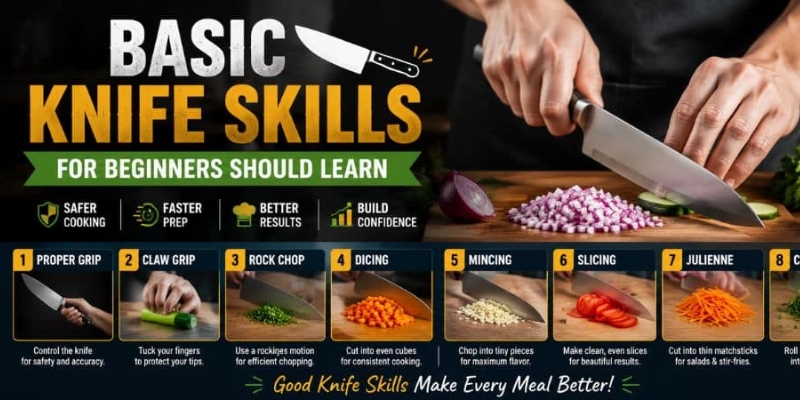
Watching an expert cook who chops an onion can make knife work look almost effortless. The knife moves quickly, the pieces are nearly identical, and somehow there are no fingers anywhere near the blade.
You don’t need years of culinary school to get there. Good knife skills mostly come down to a few habits: holding the knife properly, keeping your other hand out of the way, using the right cutting motion, and taking your time until the movements feel natural.
And honestly, good knife skills make cooking less of a chore. When your knife is sharp and you know how to use it, chopping a pile of vegetables for dinner goes much faster.
You also get more even pieces, which matters once those vegetables hit the pan. A tiny carrot piece can turn soft long before a huge one cooks through.
Whether you’re making a quick dinner after work or spending a lazy Sunday trying a new recipe, learning the basics will make a noticeable difference.
Why Knife Skills Matter More Than an Expensive Knife
It’s easy to think an expensive chef’s knife will solve everything. It won’t. A good knife certainly helps, but it can’t compensate for poor technique. I’d rather see a beginner use a reasonably priced, sharp chef’s knife correctly than struggle with an expensive blade because they don’t know how to hold it.
For most everyday cooking, you don’t need a large collection of knives. You need one that fits your hand, feels comfortable, and stays sharp. There’s another reason technique matters: even cuts cook more evenly.
Take potatoes. If you cut some into tiny chunks and leave others much larger, the small pieces may turn soft while the big ones are still firm in the middle. The same thing happens with carrots, onions, bell peppers, and other vegetables.
So knife skills aren’t just about making a cutting board look neat. They affect what you eat.
1. Start With the Right Knife
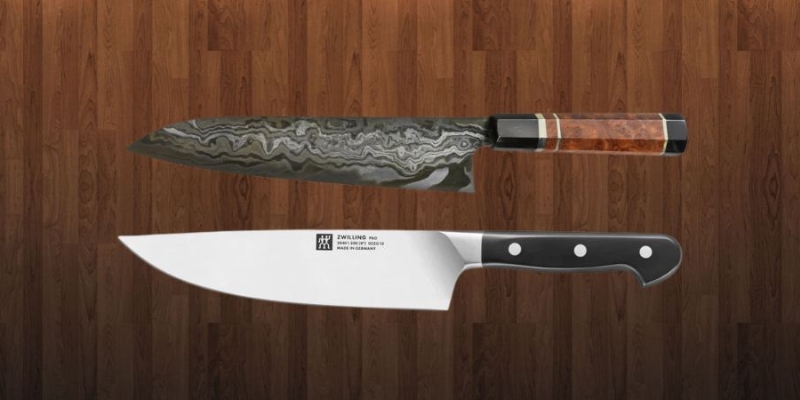
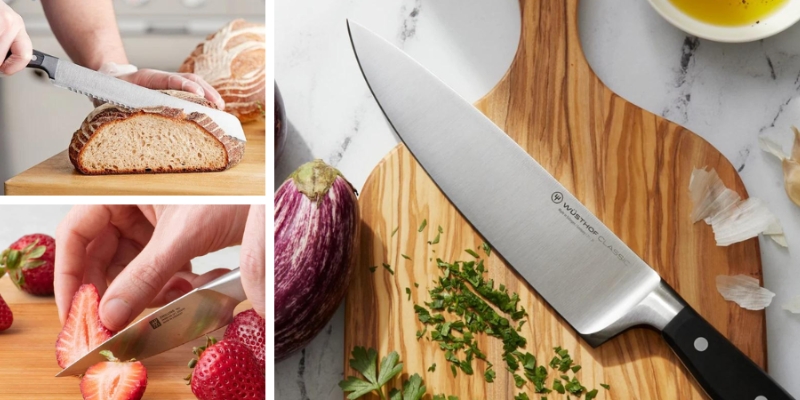
You don’t need six different knives to prepare dinner. For most home cooks, an 8-inch chef’s knife is a great first choice. It can handle vegetables, herbs, meat, fruit, and most of the everyday jobs that come up while cooking.
A small paring knife is useful for things like peeling or trimming small ingredients, but you can do a surprising amount with one good chef’s knife.
The important part is keeping that knife sharp. A dull knife tends to make you push harder. That extra pressure can cause the blade to slip, especially when you’re cutting something with a slippery skin, such as a tomato or onion.
If your knife has started struggling with foods it used to cut easily, sharpen it before assuming you need a new one.
Related:
How to Sharpen a Kitchen Knife
2. Learn How to Hold the Knife
The way you hold your knife has a bigger effect on control than most beginners realize.
A lot of people start by wrapping their whole hand around the handle. It feels secure, but it doesn’t give you much control over the blade.
Try a pinch grip instead. Place your thumb and index finger on opposite sides of the blade, just in front of the handle, and wrap your other fingers around the handle.
It may feel strange for the first few minutes. That’s normal. Once you get used to it, the knife feels more balanced, and small movements are easier to control. You also don’t have to grip the handle as tightly, which can make a difference if you’re prepping a lot of food at once.
3. Pay Attention to Your Other Hand
Your knife hand gets most of the attention, but your other hand is just as important. When you’re holding an onion, carrot, or potato on the cutting board, curl your fingertips inward so your knuckles face the knife. This is often called the claw grip.
The idea is simple: keep your fingertips tucked away while using your knuckles to guide the side of the blade.
Don’t worry about making it look exactly like a chef on television. What matters is keeping those fingertips away from the cutting edge. This also helps with consistency. As you move the food backward, your knuckles can act as a guide for the blade, making it easier to produce similar-sized slices.
4. Learn a Few Basic Cutting Motions
You don’t have to use the same motion for everything. Different foods and different cuts call for slightly different approaches.
Rocking Motion: With a rocking motion, the tip of the knife stays close to the cutting board while the rest of the blade moves up and down.
You’ll often see this technique used for garlic, herbs, onions, and other foods that need repeated chopping.
The important thing is not to force the knife straight down. Let the blade move naturally across the food.
Push Cut: The push cut feels different. Instead of bringing the knife straight down, you move it slightly forward as the blade comes down. The knife cuts through the food rather than simply pressing into it.
This works particularly well for things like carrots, cucumbers, and potatoes. Once you get comfortable with it, you’ll probably find yourself using a push cut without even thinking about it.
Slicing: When you’re slicing meat or fish, long, smooth strokes usually work better than short sawing motions.
Think about slicing a cooked roast. You want the knife to travel through the meat rather than repeatedly hacking at the same spot.
The right motion depends on what’s on your cutting board. You don’t need to force every ingredient into the same technique.
5. Don’t Worry About Speed Yet
This is where many beginners go wrong. They watch a chef chop onions incredibly fast and immediately try to copy the pace.
When you’re learning, concentrate on making controlled, even cuts. If it takes you an extra five minutes to chop an onion, who cares? You’re cooking dinner, not competing on a cooking show.
As the movements become familiar, you’ll naturally get faster. I’ve found that practicing with ordinary vegetables works better than trying to memorize a number of techniques. Chop an onion. Slice a carrot. Cut a potato into cubes. Pay attention to how you’re holding the knife and where your fingers are.
Ten minutes of practice now and then can teach you more than rushing through a whole pile of vegetables.
6. Understand the Most Common Knife Cuts
Recipes sometimes use cutting terms that sound more complicated than they really are. Dicing means cutting food into roughly equal cubes. You’ll see it in recipes for soups, stews, sauces, and many other dishes.
Mincing means cutting something into tiny pieces. Garlic, ginger, and fresh herbs are common examples. "Julienne" means cutting vegetables into thin, matchstick-shaped pieces. Carrots and bell peppers work well for this technique.
Slicing is simply cutting food into thinner pieces, although the thickness can vary depending on the recipe. You don’t need to master every fancy French knife cut to become a good home cook. Start with the cuts you actually use in your kitchen.
Related:
Japanese vs. German Kitchen Knives
7. Keep Your Cutting Board Stable
Before you start chopping, give your cutting board a little push. If it slides around, fix it. A damp kitchen towel underneath the board is a simple solution. A nonslip mat works, too.
This seems like a small thing, but a cutting board that moves while you’re trying to cut is an unnecessary safety problem.
The board itself matters as well. Wood and suitable plastic boards are generally easier on knife edges than hard surfaces such as glass, marble, granite, or ceramic.
And if you hear that awful scraping sound when someone uses the cutting edge of a knife to drag food across a board, don’t copy it. Use the back of the knife or a bench scraper instead.
8. Let the Knife Do the Cutting
If you find yourself pressing really hard on the knife, stop for a second. A sharp kitchen knife shouldn’t require much force. Instead of pushing straight down, use a controlled rocking or forward motion and let the edge move through the food.
This is especially noticeable when cutting vegetables. A sharp knife should feel like it’s doing most of the work.
If you have to lean your body weight into a carrot just to get through it, there’s a good chance the problem is the knife, not your technique. It may simply need sharpening.
Caution for You-
Knife Safety Is Part of Knife Skills. Knife safety isn’t something you learn separately and then forget about while cooking. It should be part of how you handle the knife every time.
Keep your cutting area reasonably clear. Don’t chop while distracted. Keep your guiding-hand fingertips tucked away, and if you drop a knife, let it fall.
Never try to catch it. A falling knife is much less dangerous than the one you grab at and accidentally catch by the blade. When carrying a knife around the kitchen, point the blade down and keep it close to your side.
Also, don’t leave knives sitting underneath soapy water in a sink. Someone reaching into the sink later may not know there’s a sharp blade hiding underneath the dishes. After washing, dry the knife and put it away. Store Your Knives Properly
Throwing knives loose into a kitchen drawer is convenient, but it’s not a wise habit. The blades can knock against other utensils and lose their edge.
Worse, reaching into a drawer full of loose knives creates an unnecessary chance of getting cut. A knife block, magnetic strip, or individual blade guard gives you a safer way to store them.
If you do keep knives in a drawer, use blade guards so the cutting edges aren’t exposed.
Related:
Honing vs. Sharpening: What’s the Difference?
Practice With the Food You Actually Cook. You don’t need to spend hours practicing knife skills.
Next time you’re making dinner, slow down for a few minutes and pay attention to what your hands are doing. Try cutting an onion into similar-sized pieces. Then slice a carrot. Practice making potato cubes roughly the same size.
Focus on three things:
- Keep a comfortable grip.
- Keep your fingertips tucked away.
- Let the knife move instead of forcing it downward.
At first, you’ll probably have to think about every movement. That’s fine. After enough repetition, you won’t have to think about the grip or the motion nearly as much. Your hands simply start doing it.
FAQ
1. What knife should a beginner learn with?
An 8-inch chef’s knife is a good all-purpose choice for most home cooks. It’s large enough for vegetables and larger ingredients but still manageable for everyday prep. You don’t need an expensive knife to learn.
2. Are sharp knives really safer?
A sharp knife is generally easier to control because it requires less force to cut food. A dull knife may require more pressure, increasing the risk of slipping. Of course, a sharp knife still needs careful handling.
How long does it take to learn good knife skills?
There isn’t a set amount of time. If you practice it a lot, maybe after a couple of weeks, chopping and slicing will feel more comfortable. The important part is using good habits every time you cook rather than trying to improve overnight.
Should beginners practice with an expensive knife?
No. A comfortable, reasonably priced chef’s knife is perfectly suitable for learning. In fact, I’d rather practice technique with a dependable mid-range knife than worry about scratching or damaging an expensive blade.
What is the biggest knife mistake beginners make?
Trying to go too fast. Fast chopping looks impressive, but there’s no reason to rush when you’re still learning. Get comfortable with the grip, keep your other hand protected, and aim for consistent cuts. The speed will come later.
Final Thoughts
Good knife skills don’t come from owning the most expensive knife in the kitchen. They come from using the knife properly and doing the same basic things correctly every time you cook.
Start with a comfortable, sharp chef’s knife. Learn the pinch grip. Keep your fingertips tucked away. Get your cutting board stable. Then practice a few basic motions until they stop feeling awkward.
You’ll probably make some uneven cuts at first. That’s part of learning. After a while, chopping an onion or slicing vegetables becomes one of those things you do without thinking much about it. And that’s really the goal: not to chop like a restaurant chef, but to feel comfortable, controlled, and safe every time you pick up your knife.
Remember, every skilled cook started with the same fundamentals. Practice patiently, prioritize safety, and let your technique develop naturally over time.