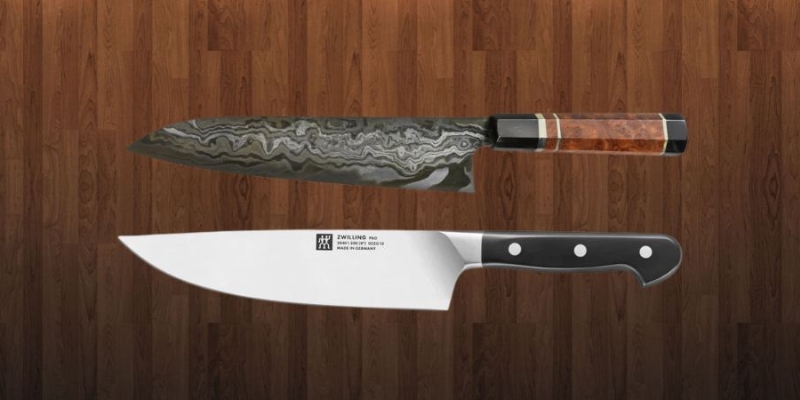
Usually, the first difference you'll notice when comparing Japanese and German kitchen knives is the sharpness. Japanese knives have a much finer edge, while German knives are made with slightly more toughness and durability in mind.
The Japanese kitchen knife is honed to a very fine cutting edge of approximately 12 to 15 degrees per side.
That edge is especially useful for slicing tomatoes, chopping herbs, prepping fish, or cutting vegetables into thin, even slices. High-quality Japanese knives make almost effortless, precise prep work in my experience.
Japanese knives also have thinner blade geometry, meaning less friction as the knife passes through food. Instead of crushing, the blade cuts through soft ingredients cleanly. You will notice this difference especially with foods such as ripe tomatoes, cucumbers, herbs, and delicate fish.
German kitchen knives tend to have a wider edge angle, usually around 18 to 22 degrees per side. They may not be quite as sharp as a Japanese blade, but that slightly thicker edge makes them more durable for everyday use and tougher kitchen tasks.
Dense vegetables, squash, poultry joints, and other demanding ingredients are less likely to be troublesome.
Most home cooks notice the sharpness difference when they are doing detailed, precision prep. Both Japanese and German knives can do a tremendous job for everyday cooking if they are properly sharpened and taken care of.
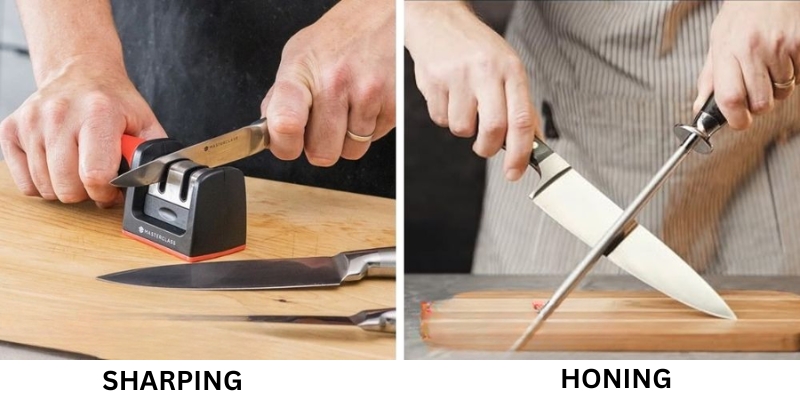
Read: Sharpening Your Kitchen Knife
Steel Hardness & Edge Retention
The type of steel in a kitchen knife plays a big role in how long it stays sharp. Japanese kitchen knives are usually constructed with high-carbon stainless steel or sophisticated powdered steels. Some of them have a Rockwell Hardness Scale rating of around 60 to 65 HRC. Harder steel can take a fine edge and hold it longer, so you may not need to sharpen the knife as often.
There is a trade-off there, though. Harder steels tend to be less forgiving. Twisting the blade as you cut, cutting bones, or attempting to cut frozen food can chip the edge more easily.
German knives are usually in the 56-58 HRC range. Their softer steel may lose a little of its sharpness sooner, but it's usually tougher and less likely to chip.
A softer German knife edge will be more prone to rolling over than chipping. In many cases, a honing rod can help to realign that edge and restore the knife's cutting power. Many home cooks love this forgiving design, especially in busy households where they use knives all week.
If you want a knife that will stay sharp and precise for a long time, a Japanese knife might be a good choice. If you want a knife that can take a little more everyday abuse and is a little less finicky, German steel has a lot to offer.
Weight, Balance and Comfort
You might overlook comfort when shopping for a kitchen knife, but you will quickly notice it once you begin preparing a full meal.
German kitchen knives are usually full-tang, with a thick spine and large bolster. This often gives them a heavier, more solid feel in the hand. Some cooks prefer the extra heft because it provides momentum when chopping and can make repetitive prep work feel more controlled.
Japanese knives are generally lighter and more nimble. They are thinner, allowing for quick, precise movements, and the lighter weight can help reduce wrist fatigue during long periods of food preparation.
"Comfortable by nature, no design is more comfortable." The best choice really depends on your hand size, grip, cutting style, and personal preference. I've found some cooks immediately like the solid feel of a German knife, while others find a lightweight Japanese blade much easier to maneuver.
Try to get a feel for a knife before you purchase it. In general, a knife that feels balanced and comfortable in your hand is better than one that has impressive specs.
Durability and daily use
If your kitchen knife is going to get a bit roughed up by hurried meal prep, family members, or the occasional mistake, a German knife is usually the safer bet. It has a thicker blade and tougher steel, so it is good for everyday tasks that put more stress on the edge
That might involve chopping tough vegetables, deboning poultry, or working with ingredients that need a little extra oomph. A good German chef's knife is meant to be a reliable all-purpose tool in a busy kitchen.
Japanese knives are best when you cut things nice and clean, using control. These knives are excellent at slicing vegetables, herbs, boneless meats, and fish, but most Japanese chef's knives should not touch hard bones, frozen foods, or aggressive twisting motions.
That doesn't mean Japanese knives are fragile. They want you to use the right technique. Many home cooks find that once they have gotten used to a Japanese knife, they naturally become more careful with their cutting habits.
Which knife is easier to maintain?
Maintenance is another important factor, especially if you are buying your first quality kitchen knife.
German knives are often a good place for the beginner to start, because they are relatively forgiving and easy to maintain. Regular honing helps to keep the edge aligned, and occasional sharpening will restore the knife's original bite.
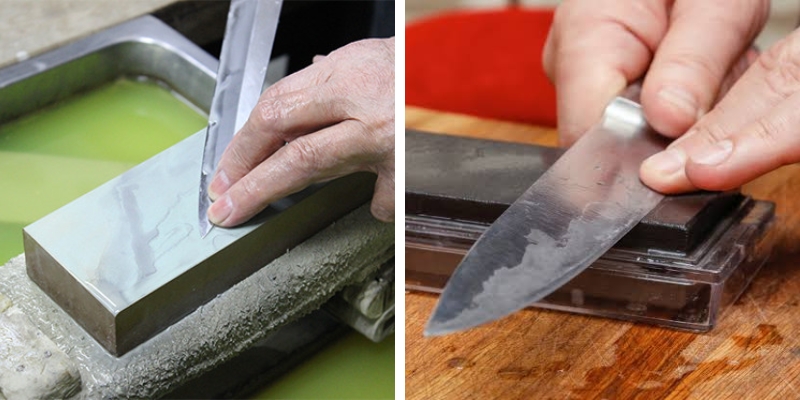
Japanese knives hold their edge longer but require more delicate handling and sharpening. Many Japanese knife enthusiasts use whetstones to maintain a precise edge angle and maximize the blade's performance.
In my experience, sharpening doesn't have to be scary, but it does take some practice. If you enjoy looking after your kitchen tools and value the craftsmanship that goes into a good blade, caring for a Japanese knife can actually become a fun part of cooking.
But if you want a knife you can depend on and that doesn't need a lot of bother, a German model might be the more practical choice.
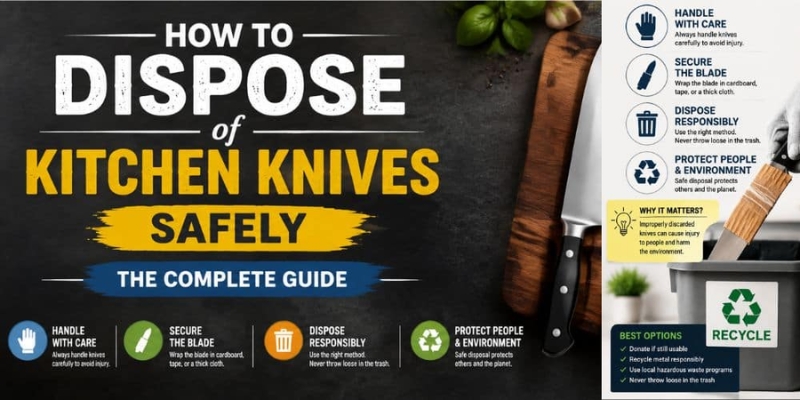
Read: How to Safely Dispose of Kitchen Knives
Final Verdict
There's no winner in the Japanese vs German kitchen knives debate. Which is better depends on your cooking habits, what you cook most often, and how much maintenance you want to do.
If you are looking for a knife that is durable, versatile, and can do a multitude of everyday kitchen tasks, a German kitchen knife is a great choice. That's especially encouraging news for home cooks with busy schedules who want something dependable and forgiving.
If you're a precision freak, love the feel of a razor-sharp blade, and are happy to give your knife a little extra attention, a Japanese kitchen knife can deliver an outstanding cutting experience.
Ultimately, the knife that suits your cooking style is more important than where it was made. A good knife that is well-maintained and feels good in your hand will make food preparation safer, faster, and more enjoyable. Your knife skills will matter more in your kitchen than just buying the most expensive knife you can afford.
Common Questions
Are Japanese knives sharper than German?
Yes, typically. Japanese knives are typically sharpened to a narrower angle on the edge, and this technique creates a very fine and sharp edge. They are fantastic for precision work like thin slicing, vegetable prep, and boneless meats and fish. What is the best kitchen knife for a beginner?
What is the best kitchen knife for a beginner?
Many newcomers find that a German kitchen knife is the easier choice. German knives are generally more forgiving, durable, and resistant to minor mistakes. They also generally need less specialized maintenance, which is helpful when you're still learning the proper way to handle a knife.
Do Japanese knives hold an edge?
Yes, usually. Japanese knives are usually made of a harder steel that keeps a fine edge for a long time. But edge retention is dependent on the particular steel, heat treatment, knife design, and how you use the blade. Japanese knives can stay sharp for a long time, but they still need proper care.
Can You Cut Bones with a Japanese Knife
Most Japanese chef's knives are not intended for cutting hard bones. Using a Japanese knife for a job like that can chip or damage its edge. If you regularly chop up poultry or work around bones, a heavier German-style knife or a suitable cleaver is usually a better choice.
Is a German knife good for everyday use?
Of course. A good German kitchen knife makes a great all-around tool for the home cook. It's durable and flexible and relatively easy to maintain. Good for everything from chopping vegetables to preparing meat or herbs.