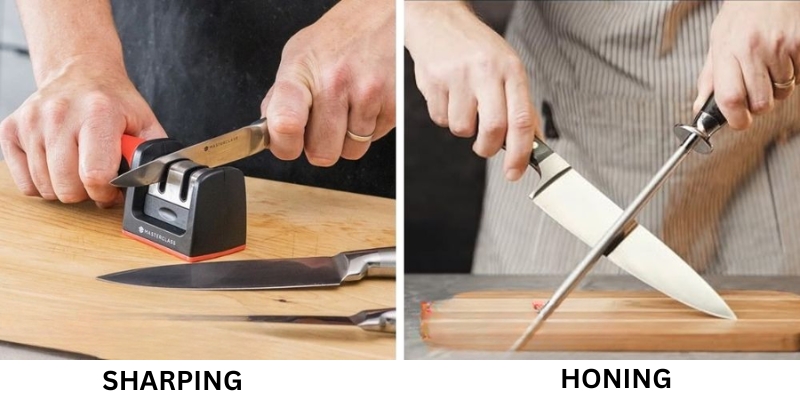
If you have been newly introduced to kitchen knives, you must have come across the terms "honing" and "sharpening." They are often used as if they were the same, but they are not the same. One of the easiest ways to optimize your knife care regimen is recognizing the distinction between honing and sharpening.
This also helps keep your knives sharper longer, requires less frequent sharpening, and can even prolong the life of your favorite kitchen tools.
Most home cooks actually sharpen knives much more often than necessary—simply because a knife that is losing cutting performance isn't necessarily dull. This scenario happens a lot when you take a glance at the blade: often, the edge of the blade was simply folded slightly during normal use; that's why honing exists.
In this guide, we'll clarify the difference between honing and sharpening, when to use each, and how to tell if your kitchen knife needs sharpening or honing. Honing should be practiced regularly for most home cooks while sharpening only occasionally.
What Is Honing?
Honing is taking the edge that already exists on a knife and maintaining that edge. Each time a kitchen knife cuts something, the cutting edge undergoes small amounts of trauma. While the actual blade may still appear dead straight, its edge gently bends. Without that sharp cut, this rounded edge slices food less effectively, making the knife feel dull even though a significant amount of steel remains. A honing rod lightly realigns that bent edge, bringing the knife back into almost as good operating condition.
That is the reason professional cooks sharpen their knives before every cooking session. It literally takes only a minute and helps keep the blade performing consistently between sharpenings. Contrarily, honing does not miraculously sharpen a knife again; it only makes an old knife sharp. It only brings a still-functional edge back to where it belongs.
What Is Sharpening?
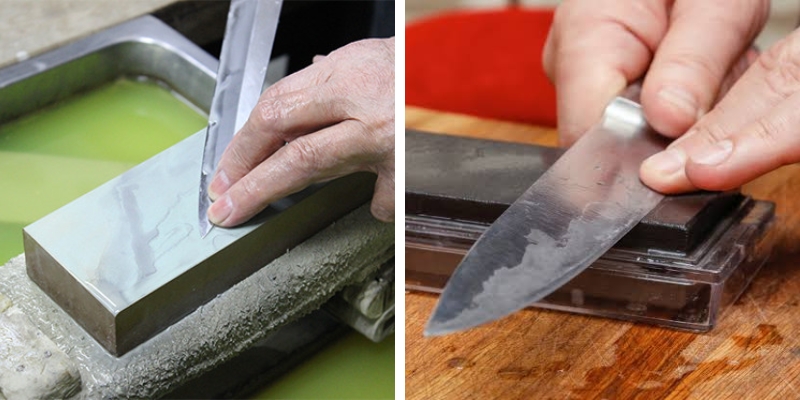
Sharpening is a more rigorous process that really changes the top of the blade. Over weeks and months of using a knife, the cutting edge slowly erodes. At this stage, no amount of honing will bring the edge back to its original sharpness because the edge itself becomes rounded. When sharpening, you remove steel from two of the blade faces until those surfaces meet, creating a new edge.
A whetstone, a manual pull-through sharpener, an electric sharpener, or a commercial sharpening service can achieve this. Since a sharpening process removes metal, it should not be done.
Why do people confuse honing with sharpening?
That makes a lot of sense, and so these terms are often confusing. Since many knife manufacturers call honing rods "sharpening steels," it can give a false impression that they are sharpening the edge every time one is used.
Actually, a normal honing rod does not really sharpen a knife. In fact, it straightens the microscopic edge that bends as the tool cuts normally. Consider bending the edge of a piece of thin paper. The paper is not lost material; it's simply slightly crooked.
A knife edge behaves similarly. The razor-thin edge starts to roll over slightly after cutting through vegetables, herbs, meat, and other foods.
A honing rod nudges that edge right back into place so you can slice with your knife efficiently again. In contrast, sharpening removes steel to produce a new edge after the old one is too damaged or worn for honing alone.
Telling When Your Knife Requires Honing or Sharpening
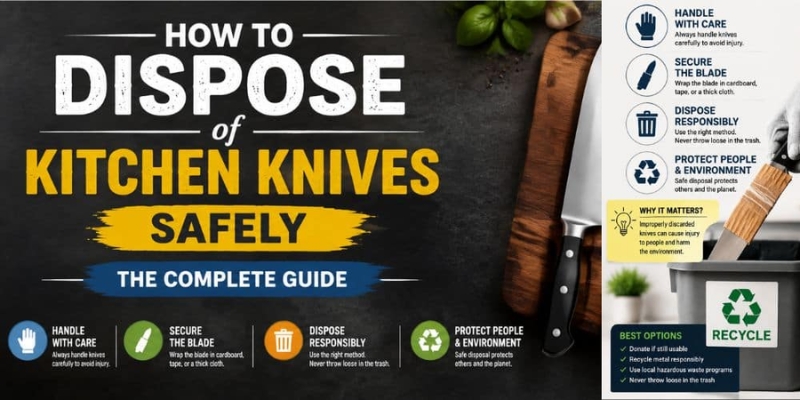
This is one of the most frequently asked questions by home cooks before permanently disposing of kitchen knives; if after a few passes on that honing rod your knife begins to feel less responsive yet still cuts with some promptness, all it really needed was a good honing. But if after honing it is still not performing well, then it very likely means the edge has become sufficiently worn that the knife needs to be sharpened (the need for sharpening is often most readily apparent when slicing through tomatoes, onions, and paper). A simple paper test can help.
Take a sheet of paper and hold it upright; then try to cut through the paper with your knife. If the blade catches, tears, or no longer cuts cleanly even after honing, then it is likely at the end of its life. Another reliable indicator is tomatoes.
A good knife should slice through skin easily with very little pressure. Sharpening is typically needed if you have to exert significant pressure or saw back and forth.
How often should you hone your kitchen knife?
Regular honing significantly reduces the need for sharpening for most home cooks. But if you cook on a daily basis, practice once or twice is more than enough. If you only cook every now and then, honing before each use will help keep your knife in excellent form.
This is why professional chefs sharpen their knives multiple times a day: they are cutting for hours. The key takeaway is that honing is preventative maintenance. This works best when the knife doesn't feel like an utterly dull blade.
When to sharpen your kitchen knife
Your sharpening frequency will depend on a variety of things, including the quality of your knife, the hardness of the steel, what type of cutting board you use, and how often you actually cook. At home, for the average home cook, they only need to sharpen their knives every 3 to 6 months.
Very high-quality Japanese steel (which is made of a harder material) may last much longer, while softer German blades will need to be honed more often but are easier to take care of. Forget the calendar, and listen to your knife. Sharpening is needed when honing no longer restores the edge.
Which Tools Should You Use?
There are tools for every maintenance activity. A honing rod is used just for edge maintenance. The ceramic rods offer some abrasiveness, and the old steel rods actually straighten the edge.
The most controlled and best result comes from a whetstone, which is used for sharpening. While they tend to remove larger amounts of metal and provide less precision, pull-through sharpeners and electric sharpeners are much easier to use. Choosing the right tool depends on your expertise, the type of knife you own, and how much upkeep you're willing to do.
Does Every Knife Need Honing?
Not necessarily. This is because the steel used in many Western-style German knives is just soft enough that the edge rolls instead of chipping, and regular honing can effectively get rid of burrs, so these types of blades really respond rather well to it.
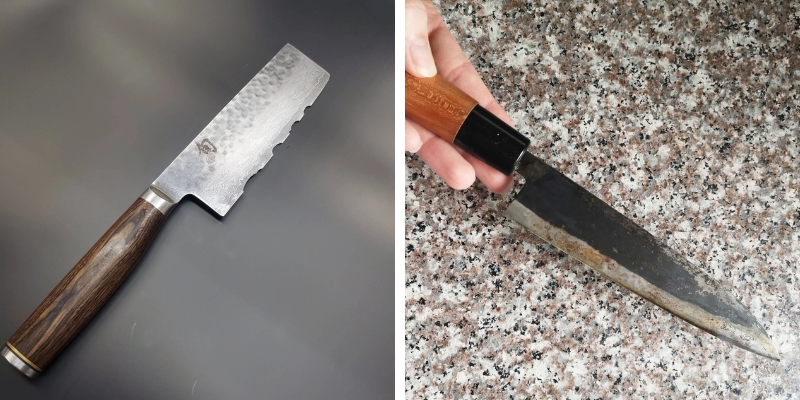
In contrast, Japanese knives are typically made from much harder steel. This makes their edges straighter for longer, but more prone to chipping if abused in the slightest. That is why frequent honing is often more beneficial for German knives than for many Japanese knives. Note: Always adhere to the manufacturer's instructions for your particular blade.
Common Mistakes to Avoid
One of the biggest mistakes novices make is thinking they can substitute honing for sharpening. Honing is a great way to maintain, but it won't rebuild an already worn edge. A typical mistake is to hone too often. This is because sharpening removes steel, and repeated needless sharpening will shorten your knife's life over time.
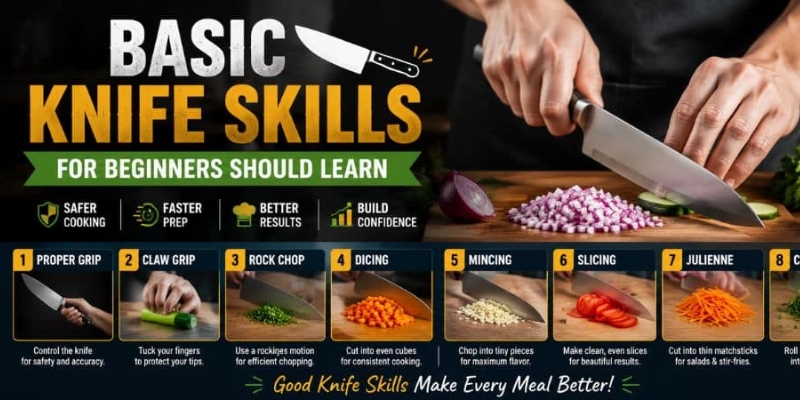
Applying too much pressure while honing is also counterproductive. Gentle, calm strokes, not aggressive movements, are more useful. And lastly, do not use honing rods and sharpening stones that are either damaged or dirty. Clean tools yield more and also protect your knife! In addition to these tasks, you can learn basic knife skills for using your knives easily and keeping them long-lasting.
Honing Vs. Sharpening—Which Is Better
It's not so much about short versus long, to be honest. Today, sharpening and honing should be thought of as parts of a total knife care regimen, not one following the other. Honing maintains the edge that is already established and extends the time between sharpening sessions.
Sharpening restores the edge after damage has gone beyond what honing can fix. If you are habituated to honing your knives frequently and only sharpening whenever needed, you get a better cut while extending the life of the blade for many years.
For any home cook who wants to keep their kitchen knives performing at the highest levels, understanding honing vs sharpening is essential. Honing should be integrated into your regular kitchen habits, designed to keep the edge in alignment and extend its useable life. Sharpening, on the other hand, is a periodic service that redefines an edge after use by forming a fresh biting surface.
Combine these two techniques with proper knife care, and you have created safety, confidence, cleanliness, and longevity for your investment in kitchen tools. Even if you have a great chef's knife or Japanese blade, making sure you're using your hone and steel when required is the key to realizing an excellent return on investment.