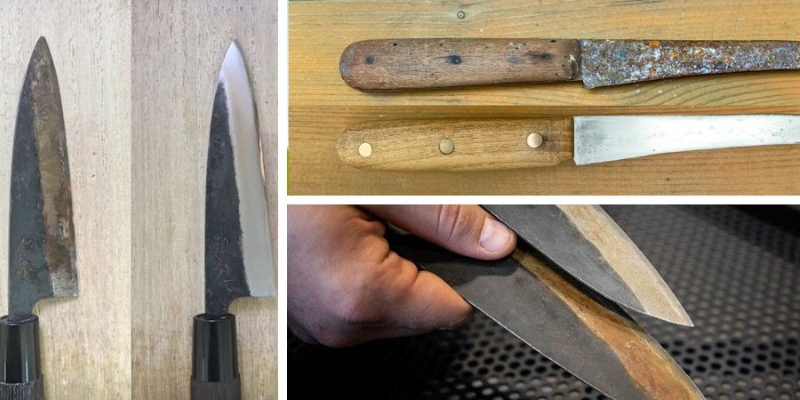
One of the most annoying things is when you want to grab hold of your beloved kitchen knife, and it meets you with orange-brown rust spots on the blade. It could be a $100+ chef's knife or a cheaper utility knife; rust makes any knife look worn and poses issues with safety and performance.
The good news is that rust on a kitchen knife is relatively simple to remove with basic household items or commercial rust-removing products. Usually, without hurting the blade, you are able to restore its grip and utility.
This guide will explain why kitchen knives rust, whether or not this is harmful to human beings, and the best tip on how to remove rust from a knife—using both household ingredients and commercial products.
Read: How to Sharpen a Kitchen Knife at Home.
Why Do Kitchen Knives Rust?
Rust is the oxidation of iron found in the knife blade. The result is a chemical reaction that forms what we commonly refer to as rust — iron oxide. Certain knives resist rusting better than others, because nearly any knife can rust, provided the right conditions.
Leaving Knives Wet
Why do knives rust most of the time: a reason is prolonged exposure to water. Even the slightest amount of moisture on the blade post-washing could cause rust spots down the road.
Washing Knives in the Dishwasher
Dishwashers subject knives to heat profile, they are exposed to moisture and somewhat nasty chemicals of detergent. These conditions can damage protective coatings, and lead to rust formation
Storing Knives in Damp Areas
If you have a knife that is kept in an area with humidity, or one put into a drawer before fully drying out it could rust over time.
Acidic Foods
Things like tomatoes, lemons, citrus fruits, onions, and vinegar can cause corrosion marks if the blade isn’t cleaned soon after use.
High-Carbon Steel Blades
This alone is what draws so many professional chefs to high-carbon steel knives since the metal can hold a razor-sharp edge incredibly well. However, these knives rust much more easily than stainless steel models and need additional care.
Signs Your Knife Is Starting to Rust
- Brown or orange thickness on the blade
- Rust marks: small dots of rust close to the edge
- Areas where the metal is rough or has pits
- Unremovable dark stains in your tracks
- Reduced cutting performance
- Dealing with rust at the beginning makes it much easier to remove and also minimizes permanent damage.
Get Rust Off a Kitchen Knife In Some Simple Steps!
There are many ways to remove rust from a kitchen knife. How bad the rust is will determine how best to it, but what you have to hand also.
Method 1: White Vinegar Soak
Great for: Light to moderate rust White vinegar has acetic acid in it, which can dissolve rust without needing to scrub hard.
What You’ll Need
- White vinegar
- Container or glass
- Soft sponge or cloth
- Warm water
- Towel
Steps
- Cover the rusty part with a container of white vinegar.
- Put the knife into the vinegar.
- Leave to soak for five and 15 minutes.
- Use the knife to pick out loose rust and scrub gently.
- Rinse thoroughly with clean water.
- Immediately dry with a clean towel.
- Vinegar is acidic and also dissolves iron oxide, which makes it easier for the rust to be wiped clean without scratching up the blade.
Method 2: Baking Soda Paste
Best for treating surface rust and specific spots. Baking soda is a gentle abrasive that can remove rust without damaging the underlying metal.
What You’ll Need
- Baking soda
- Water
- Soft toothbrush or sponge
Steps
- Stir a little bit of water with some baking soda to form a thick paste.
- Apply the paste on rusted spots.
- Let it sit for 15–30 minutes.
- Using an old toothbrush or sponge, scrub gently.
- Rinse thoroughly.
- Dry completely.
- Baking soda has small particles that do not have too high a abrasiveness leading rust to come off the surface.
Method 3: Rust Eraser
Best for stubborn rust spots. Rust erasers are cleaning blocks specially formulated to erase oxidation from the surface of knives and tools.
Steps
- Wet the blade slightly.
- Then rub the rust eraser on the affected areas.
- Use light, even pressure.
- Continue until rust disappears.
- Rinse and dry thoroughly.
- At the same time, rust erasers remove oxidation mechanically and do a better job of preserving the blade’s finish compared to many abrasives.
Method 4: Food-Safe Rust Remover
Best for: Heavy rust buildup. When there is a lot of corrosion, commercial rust removers can help save time.
Steps
- Follow the manufacturer’s instructions carefully.
- Pour le produit sur la zone à traiter.
- Let it stand for the suggested period.
- Wipe away residue.
- Wash the knife thoroughly.
- Dry completely before storage.
- The products are made from chemicals meant to dissolve the rust itself in a fair amount of time.
Read: Essential Knife Skills Every Beginner Should Master
Household Ways to Get Rid of Rust From a Kitchen Knife
If you want to avoid commercial products, you can use a few common kitchen ingredients for natural rust removal.
Vinegar: Vinegar is still one of the best home brass rust-removing agents.
Best for:
- Light rust
- Surface discoloration
- Regular maintenance
Baking soda: A paste of baking soda is very inexpensive, safe, and simple to make use of.
Best for:
- Small rust spots
- Gentle cleaning
- Stainless steel knives
- With the mild abrasiveness of salt, lemon juice will very easily loosen rust.
Steps
- Sprinkle salt over rusty areas.
- Squeeze freshly squeezed lemon juice on top.
- Let the mixture stand for 15–20 minutes.
- Scrub gently with a sponge.
- Rinse and dry.
Lemon and Salt: The acidity of lemon juice combined with the mild abrasiveness of salt can loosen rust effectively.
Steps
- Sprinkle salt over rusty areas.
- Squeeze fresh lemon juice on top.
- Allow the mixture to sit for 15–20 minutes.
- Scrub gently with a sponge.
- Rinse and dry.
The citric acid dissolves oxidation, while salt helps lift rust from the surface.
Potato: Working on the notion that potatoes contain oxalic acid which breaks rust down.
Steps
- Cut a potato in half.
- Spread some baking soda or dish soap on the cut side.
- Pat the potato onto your rusty spots.
- Keep going until the rust starts falling off.
- Rinse the knife and then place it in the dryer to dry.
Lemon Juice and Baking Soda: For slightly more stubborn rust, the cleaning power of lemon juice and baking soda can be combined.
Steps
- Lemon Juice and Baking Soda Paste
- Apply it to rusted areas.
- Let it sit for 20 minutes.
- Scrub gently.
- Rinse and dry immediately.
- The combination provides light acidity and surface abrasion, making it very effective on light-to-moderate rust.
Which Household Method Works Best?
Among all the types of vinegar, white holds the most optimized balance between efficiency, cost and effort for sanitizing kitchen knives. Cooked sodium bicarbonate provides fantastic upkeep as well as gentle corrosion whilst lemon-primarily based alternatives are appropriate for minor tarnishing and early-stage deterioration.
No matter what you might use to clean it, before doing anything else at the end, make sure to wipe the knife dry. A clean blade will only begin to rust again if moisture is on the surface.
Read: Japanese Kitchen Knives vs German Kitchen Knives
Commercial Rust Removers (When to Use Them)
While again, things such as vinegar and baking soda do work well for removing light rust from knives, they are not always sufficient enough for heavy corroding or stubbornly resonating stains. In those situations, a commercial rust remover may be worthwhile in the time it saves you and potentially better results. The important part is that you select a food-safe product specifically designed for knives, kitchen tools, or stainless steel. Do not use industrial rust removers unless the manufacturer makes it clear that the product is safe for food-contact surfaces.
Benefits of Commercial Rust Removers
- Faster Than Home Remedies To Remove Heavy Rust
- Require less scrubbing
- Help restore the blade’s appearance
- Able to get to small rust spots and pitted places
- Great for refurbishing old and battered knives
Types of Rust Removal Products
Rust Erasers: These are abrasive cleaning blocks whose sole purpose is to remove surface rust without ruining the finish of the blade. They are very handy, low-skill, and high-performing at removing light to moderate rust, which is why many knife enthusiasts love them.
Best for:
- Surface rust
- Japanese knives
- Chef’s knives
- Routine maintenance
Food Safe Rust Removers for Kitchen Tools: Liquid or gel rust removers designed specifically for kitchen tool use can effectively dissolve stubborn rust without affecting the blade after washing.
Best for:
- Heavy rust buildup
- Older kitchen knives
- Deep discoloration
Metal Polishes: Some metal polishes contain some mild cleaning compounds that removes oxidation while providing shine. They are most effective once a large portion but not all of the rust has been removed.
Best for:
- Finishing touches
- Polishing stainless steel blades
- Removing light stains
Guide to using a proprietary rust remover
While each product may differ, this is typically the process you will go through:
- Wash off the knives to remove grease and food residue.
- Follow the rust remover as per the manufacturer instructions.
- Wait for the prescribed time period.
- If necessary, scrub gently with a soft cloth or non-abrasive pad.
- Rinse thoroughly with warm water.
- If any product is still left, washing with dish soap.
- Dry that very knife with a clean towel without delay.
As the process of removing rust can become very physical in nature as one needs to scrub and scrape off all the rusted parts as best as possible, instead what you should avoid when removing anything that is stainless steel:
Not all rust-removal methods are safe for kitchen knives. Using some of those methods might remove the rust but will also destroy the blade, shorten its life or ruin its finish. These are the big mistakes to avoid.
1. Steel Wool (Unless Absolutely Necessary)
Steel wool is very abrasive and it digs very deep into the blade. Those scratches also allow moisture to accumulate, which makes it much more likely to rust down the line.
Instead, use:
- A soft sponge
- A non-scratch scrub pad
- A rust eraser
2. Bleach or Harsh Chemicals
Bleach is extremely caustic to metal and can cause irreversible harm if it gets on the blade. Never soak your knife in:
- Bleach
- Chlorine cleaners
- Oven cleaner
- Drain cleaner
- Industrial degreasers
These chemicals can cause embrittlement of the steel and form toxic residues.
3. Leaving the Knife Soaking Overnight
Vinegar works really well for removing rust but soaking your knife in it for many hours may even start to attack the metal itself after some time, especially if it is high-carbon steel. For most knives, soak 5–15 minutes.
4. Power Tools or Wire Brushes
- Grinders, rotary tools or wire wheels can get rid of rust FAST but may also:
- Damage the blade’s finish
- Remove excess metal
- Overheat the blade
- Affect the knife’s edge
Such tools are only suitable for use in a professional restoration.
5. Scraping With Another Metal Object
Never use an implement of any type a knife, screwdriver or metal scraping tool to remove the rust. This adds scratches to the blade and potentially more corrosion points.
6. Sticking a Knife Back in The Drawer While Wet
This is one of the larger reasons that rust returns Just a few drops of hidden water on a knife block or in a drawer can start the corrosion chain reaction all over again. - Make sure knife is completely dry before putting it away.
How To Avoid Future Rust
The most effective way to combat rust is to prevent it from forming in the first place. Luckily, rust can be prevented with a few good habits.
Wash Knives by Hand
Some dishwashers expose knives to moisture, detergent, and high temperatures.
Instead:
- Wash immediately after use.
- Using warm water with mild dish soap
- Avoid soaking the knife.
Dry the Knife Immediately
Never let a knife air dry. Wipe dry all moisture with a clean towel:
- The blade
- The spine
- Around the handle
This one habit decreases the possibility of rust by leaps and bounds.
Store Knives Properly
This is how proper storage keeps moisture away from the blade. Good storage options include:
- Magnetic knife strips
- Knife blocks with proper ventilation
- Blade guards
- Knife rolls
Do not throw knives into a messy drawer where moisture can get trapped.
Use a Light Coat of Food-Safe Mineral Oil
For example, if you have carbon steel knives or some rarely used knives, you can put a thin layer of food-grade mineral oil as a protective barrier against moisture. A light coat once every couple of weeks can cut down on the rust.
Clean After Cutting Acidic Foods
High-acid foods may accelerate corrosion. Examples include:
- Tomatoes
- Citrus fruits
- Lemons
- Limes
- Vinegar
- Pickles
- Pineapple
Wash and dry the knife immediately after use.
Keep the Kitchen Dry
High humidity encourages rust. When you live in a humid climate.
- Improve kitchen ventilation.
- Use a dehumidifier if necessary.
- Keep wet dish towels away from knives in storage.
Inspect Your Knives Regularly
It is widely viewed as much easier to remove small rust spots than widespread corrosion. Every few weeks:
- Inspect the two sides of your blade.
- Look near the cutting edge.
- Inspect around the handle.
- Eliminate any signs of rust up before it function things.
Frequently Asked Questions (FAQ)
1. Is it possible to completely remove rust from a kitchen knife?
Yes. More often than not, vinegar, baking soda, lemon juice, a rust eraser and/or food-safe commercial rust removers eliminate all surface rust. Nonetheless, heavy rust can leave measuring marks open after the corrosion is gone.
2. Is it safe to use a knife after removing rust?
Yes. If the rust is gone, wash the knife with warm water and dish soap, rinse well, dry completely. The blade can be reused if no deep corrosion or structural damage to it occurs.
3. Why does my knife (stainless steel) keep rosting?
Stainless steel is rust-resistant—not rust-proof. Rust in a knife is due to moisture, salt, acidic foods, poor storage or leaving the knife wet.
4. Is baking soda good for cleaning rust off knives?
Yes. Baking soda acts as a mild abrasive and is very effective for light surface rust. It's one of the safest and most household techniques too, because it is not going to scratch maximum knife blades when you use a gentle sponge or toothbrush.
5. Does vinegar damage kitchen knives?
No, provided it’s used correctly. Soaking a knife in white vinegar for 5–15 minutes is considered a safe solution to fighting surface rust. Do not soak the blade for hours to come, in particular when it’s made with high-carbon steel.
6. Does vinegar damage kitchen knives?
Not necessarily. Light to moderate rust on knives can be restored in most cases. You need to replace knife only if rust has eaten deep into metal that the core has been affected or structural integrity is harmed, in order for it not to affect its function and safety.
7. How to get rid of corrosion on a kitchen knife as quickly as possible?
For light rust, white vinegar and a soft scrub often provide the quickest in-home remedies. If the scale is heavier, a rust eraser or food-safe commercial rust remover normally produces quick results. The key to preventing rust of knife — a professional chef explained
Professional chefs often hand-wash their knives, dry them promptly after use, store them in dry environments, and wipe food-safe mineral oil on carbon steel blades when necessary. These simple steps also help to prevent the knife from rusting, and this extends its life.
While spotting Rust on a kitchen knife can be concerning, it is often an at-home fix that takes little effort. If it only has light rust, you can clean up a blade using common household ingredients like white vinegar, baking soda, lemon juice or even a potato instead of spending money on fancy tools. For more serious corrosion, food-safe commercial rust removers or erasers will provide a faster and better alternative.
The key thing to take from this is that removing rust is only half of the fight. With proper care washing by hand and immediately drying, storing your knife in a dry place, and topically applying food grade mineral oil will prevent rust from returning.
A basic upkeep of a few minutes will keep your kitchen knife sharp as well as clean, it will not get rusty for many years. Regardless if your price point is an inexpensive stainless steel utility knife or a higher end carbon steel chef's knife, care is the best investment you can make to protect its performance and longevity. Rust?