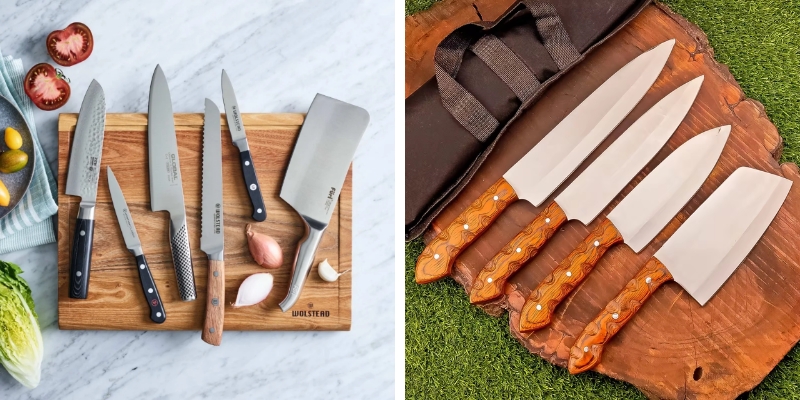
Most kitchen knives are made from reusable metals like stainless or carbon steel, so the big plus side is that most kitchen knife collections will be recyclable. The challenge is to dispose of them safely. No need to create unnecessary waste; though your knife might be dull, broken, or rusty, it can still go out responsibly.
However, it is worth noting that the knives must be made up of special components of steel. Kitchen knives are widely recyclable, yes, although loose kitchen knives should never be put straight into your household recycling bin.
Traditionally, bladed kitchen knives are stainless steel, carbon steel, or another metal alloy. Such materials are recoverable and can be processed at metal-processing or scrap-metal sites.
Recycling rules differ from place to place. Some municipal recycling services accept small metal items, and others avoid sharp objects. Please confirm with your municipal waste authority or recycling center before transporting a knife anywhere.
1. First Check if the Knife is Reusable
Before pulling or recycling an old knife, determine for sure… does this knife need to go? And a knife that has gone dull may need nothing more than to be professionally sharpened. A well-made blade that has no structural problems and a handle that isn't loose can be sharpened for many years of service.
You may also have a knife too seldom used but still in perfect working order. Instead, it may be better to donate the item before recycling.
Suitable options can include:
- Local community organizations
- Cooking schools
- Thrift Stores (that accept kitchenware)
- Friends or family members
- Community reuse programs
Keep in mind that some organizations will not take sharp kitchen utensils, so always contact the organization first.
2. Old Knives to a Scrap Metal Recycling Middle
If your knife is beyond repair, a scrap-metal recycling plant can be one of the best places to send it. Up to 90% of kitchen knives have sufficient metal in them for recovery rather than disposal. By recycling the metal, it can feed another manufacturing cycle instead of becoming waste. Call beforehand and ask, “Do you accept household kitchen knives or sharp metal cutlery? This matters because not every recycling center processes sharp objects. If they agree to take them, package the knives securely for transport.
3. Place them into a Local Household Recycling Scheme – Only if Knives are accepted
Certain local recycling programs will take metal kitchen utensils, but you should never assume that knives are included. Check out the website for your local recycling authority or call them directly. Search for information about:
- Scrap metal
- Household metal recycling
- Cutlery recycling
- Sharp metal objects
If the guidelines note that knives are accepted, adhere to their packing instructions.
4. Donate A Usable Knife Rather Than Recycling
When your knife is still usable, donation tends to be a more environmentally sound choice than recycling. Now ask yourself, what is really wrong with it? Most knives with dull edges can be sharpened. An unglamorous knife might be boring, but it still cuts like a dream. A stiff, old knife might be well suited to someone building their very first kitchen.
On the other hand, do not donate a knife with a cracked handle or loose blade, as well as one with severe corrosion and/or structural damage. If you can't use it safely, then you shouldn't donate it either!
5. Dispose of or Sell Better Knives
There are kitchen knives that hold up their value after years of service. This is particularly the case with high-quality chef's knives from established manufacturers. You can sell the knife or pass it on to someone who will use it properly, as long as it's in working condition.
Before doing so:
- Clean the knife thoroughly.
- Check the blade for damage.
- Check that the handle itself is secure.
- Sharpen it if appropriate.
- Inform the buyer or recipient of any defects.
6. How to properly and safely wrap a knife before throwing it away.
This is among the most vital steps.
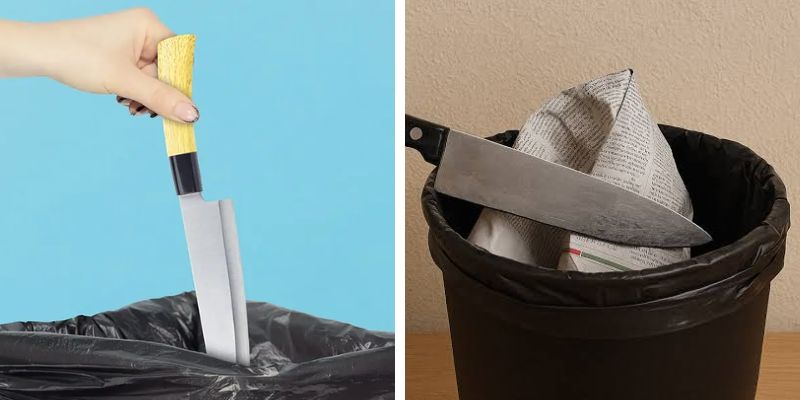
- Never put an exposed knife in a rubbish or recycling container.
- If it is too heavy, wrap the blade tightly in some thick cardboard.
- Step-by-step:
- Clean and dry the knife.
- Get a piece of tough cardboard, an inch or two longer than the blade.
- Stack 2 pieces of cardboard and insert the blade between them.
- Use quality tape to secure the cardboard tightly.
- Ensure the blade and tip cannot sneak out.
If the knife is headed for a disposal stream that allows you to leave knives wrapped in packaging, label it “SHARP — KNIFE.” Dispose of it according to the guidelines established by your local recycling agency. If you plan to bring several knives with you, wrap them one at a time instead of putting multiple free blades together.
7. Loosely put knives in the recyclables if you make glass recycling somewhat separate.
This deserves special attention. While metal is also largely accepted in most household recycling services, a free-floating kitchen knife would likely be disastrous. In recycling, workers may have to sort things by hand, or machines can get stuck with items that are not discarded properly. A sharp blade can also hurt someone handling the material.
So the rule is simple:
For example, 'metal' does not automatically become recyclable in your curbside recycling bin. Always heed the specific guidelines from your local recycling provider.
8. What About Rusty Kitchen Knives?
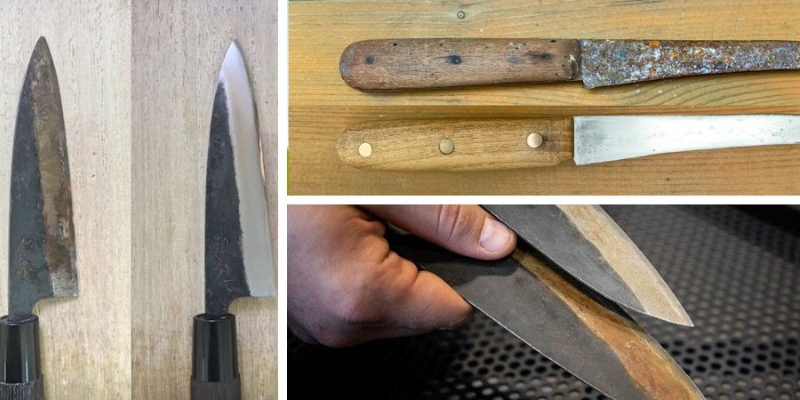
It's not like the rusty knife is headed straight for the rubbish bin. If the rust is pretty light, it can be stripped away to allow cleaning and sharpening of your knife for problem-free use.
However, heavy rust could threaten the blade itself, especially if there is pitting or structural damage. If it is no longer safe to use, dispose of/recycle the knife as hazardous waste and package securely before taking this to a relevant facility
9. What About Ceramic Kitchen Knives?
Steel knives are different from ceramic. This ceramic blade is not mostly steel and, for this reason, however great it is, usually cannot be recycled in your regular metal recycling.
If your local facility takes ceramics, you could throw a ceramic knife into the metal recycling container, for example. Wrap blades with care, as ceramic can be very fragile and will shatter into sharp pieces.
10. What About Kitchen Scissors and Other Sharp Tools
Kitchen scissors, peelers, cleavers, or any sharp kitchen tools follow the same basic safety principle. Before disposing of them:
- Check to see if they are reusable.
- Find an appropriate donation point.
Still safe and useful?
- Save, sharpen, or donate/sell/throw away
- Could be made of recyclable metal, yet end up in a landfill? *
- Contact a scrap-metal or recycling plant.
- Ceramic or mixed materials?
- Before disposing, ensure the waste facility is nearby
Damaged or dangerously sharp?
Conventional disposal and where to dispose: Seal it up properly; from there on, you need to listen entirely to your local waste authority.
Frequently Asked Questions
Q: Will kitchen knives be accepted in my recycling bin?
A random loose kitchen knife does not belong in your recycling bin (but it shouldn't be here just as a rule). Some recycling programs will accept knives that are in packaging, if local rules allow. Always confirm with your local recycling provider.
Q: Are stainless steel kitchen knives recyclable?
Yes. Stainless steel is recyclable, but the knife would have to get to a facility that accepts this sort of metal. Do Not Expect Your Curbside Recycling Program to Accept Sharper Cutlery
Q: Should I toss an old knife in the garbage?
If recycling or reuse is not possible, disposal may be necessary. That said, never do it with a knife when it is not in position. Wrap it securely, as instructed by your local waste service.
Q: Would it be possible to donate old kitchen knives?
If the knife is still safe and usable, donating it may be a better option compared to recycling. If you intend to donate items, contact the organization in advance because some charities will not accept knives or sharpening tools.
Q: What about recycling a knife block with the knives?
That really depends on what the block is made of. Some wooden blocks have plastic components or metal parts. Carefully take out the knives and consult your regional recycling policies for disposal guidance on the block itself.
Final Thoughts
Recycling a kitchen knife isn't hard, but convenience needs to be avoided for the sake of safety. If the knife has some life left in it, sharpening and donating, selling, or giving away is usually better. When the blade is truly done, take it to a local scrap-metal or recycling center that specializes in sharp metal.
Third, most obviously, do not leave a knife bare in the recycling bin or trash. So wrap that blade up tight and check with your local waste authority on the disposal guidelines, or at a minimum, allow metal to be recovered instead of going in the landfill unnecessarily.