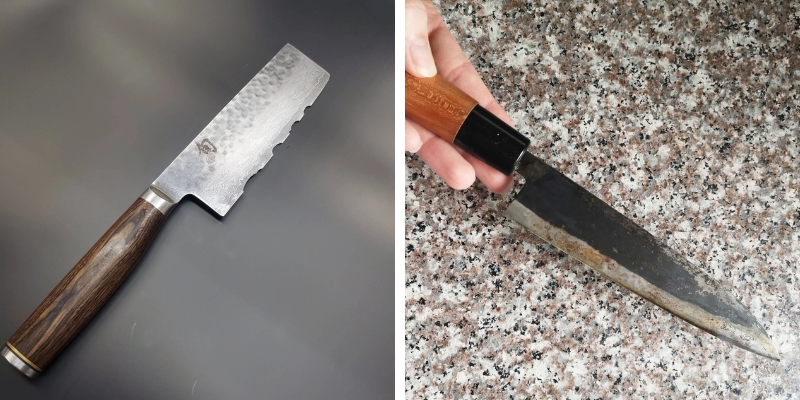
If taken care of, a quality kitchen knife should last decades or longer. But as it turns out, most people end up ruining their knives without even realizing they are sharpening them through simple activities that undoubtedly dull the edge of the blade, loosen its handle, and lessen the moisture circumstances leading to rust.
Whether you want an inexpensive chef's knife or a top-quality Japanese blade, following these few simple tips can help you avoid making some common mistakes that will not only allow your blade to last longer but should also make cooking easier as well. In this post, we cover the most common mistakes that wreck a kitchen knife, why they matter, and what you should do instead.
1. Keeping Knives in the Dishwasher
One of the most reliable ways to ruin a kitchen knife is to toss it in the dishwasher. Although it sounds like a quick fix (for example, after you have prepared dinner), the dishwasher creates an environment that is cold and brutal for knife blades. Knives are under high heat, strong water pressure, abrasive detergents, and other forces constantly throughout a wash cycle. Higher-quality stainless-steel knives are still sharper in general, but most have trouble holding an edge over time, while carbon steel knives tend to bend out of shape and have a tendency to rust even more easily.
It was already chipped from the repeated contact against these plates, pots, and silverware. Prolonged exposure to heat and moisture can even cause the wood on your knife handle to deform, crack, or loosen from the blade itself. These problems seriously diminish the performance and longevity of a knife over time.
Why dishwashers damage kitchen knives:
- At high temperatures, it reduces the sharpness of fan blades.
- Strong detergents make slipping into both corrosion and discoloration faster.
- Moisture is a breeding ground for rust, particularly when it comes to a carbon steel knife.
- Bumping around while packing with other utensils creates chips.
- They are not very durable and will start to crack or warp only after a few wash cycles.
Better Alternative
The safest way to wash any kitchen knife is by hand. So, after using it, wash right away with lukewarm water and a few drops of mild dish soap along with a sponge. Stay away from abrasive scrubbers that may harm the finish of your blade. After cleaning, pat the knife thoroughly dry with an absorbent towel and store it cleanly. It takes less than a minute to do, yet it can extend the life of your knives by years!
2. Chopping On Glass, Marble, or Ceramic Boards
People pour money into a really great chef's knife and then grind the damn edge by dragging it across an unyielding cutting surface. Glass, marble, granite, and ceramic cutting boards are beautiful in a modern kitchen, but they're also some of the most damaging surfaces on any knife.
Steel is really hard, but these materials are even harder. Each time the blade touches a solid surface, its cutting edge endures wear on an almost imperceptible scale. However, this damage is not always apparent, but it builds over time and results in your knife dulling at a far earlier date than should be the case. You will have to sharpen it more frequently, which takes off extra steel and shortens the life of a knife.
Avoid cutting on these surfaces:
- Glass cutting boards
- Marble boards
- Granite countertops
- Ceramic cutting boards
- Stone countertops
- Good Cutting Boards for Kitchen Knives
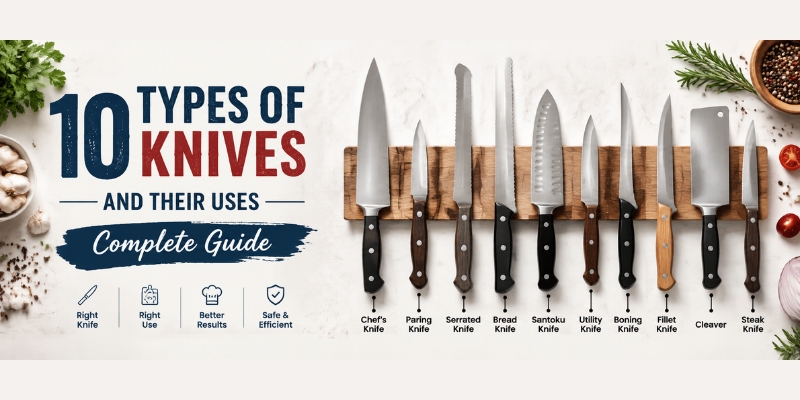
3. Using the Wrong Knife for the job
Every kitchen blade was made for its job. Sadly, many utilize one blade for everything, and that too destroys it. Though a chef's knife can easily slice up vegetables, herbs, and boneless meats, it is not for cutting bones or frozen materials. Similarly, an antique paring knife is not designed to divide butternut squash or pumpkins.
Using the wrong tool can damage your knife, and improper use of a utility blade can also lead to accidents. Using a knife not appropriate for the task will likely cause you to push too hard and slip, which can lead to significant cuts.
Here is a list of the more common types of knife misuse:
- Chopping Bones with a Chef Knife
- Cutting/splitting hard squash with a paring knife
- Using A Utility Knife To Cut Frozen Foods
- How to cut raw meat with a bread knife
- Potential damage includes:
- Chipped cutting edges
- Bent or warped blades
- Broken knife tips
- Increased risk of hand injuries
- Picking the right knife protects both your investment and you!
4. Cutting Frozen Foods
One of the most significant dangers to kitchen knives is frozen foods, which are far more difficult than fresh ingredients. When a thin edge of the blade is cutting through dense frozen meat, vegetables, or food covered with ice, it puts tremendous strain on how fragile this structure can be. Instead of cutting smoothly, it often encounters heavy resistance that can chip or even break the blade. This type of damage is common with Japanese knives, which are renowned for their very hard, thin edges.
- Cut once food has melted
- Whenever applicable, utilize a heavy-duty meat cleaver
- Use as per manufacturers' guidelines for tough materials.
5. Twisting the Blade While Cutting
The most classic cutting error is to chop into food and then twist the knife sideways, pushing it downwards for separation. It sounds harmless, but it places side torque that most kitchen knives were not designed to deal with.
Knife blades are designed to slice straight down and forward, not side-to-side. Such movements can create uneven stress on the thin cutting edge, in particular near the tip, due to twisting. This can lead to dents, chips, and cracks over time or bending out of shape permanently. Japanese knives in particular have this issue because they are typically made from very hard steel that is ultra-sharp but not as flexible as the blade styles of many Western-style knives. Instead of twisting the blade:
- Remove the knife completely from the food.
- Reposition the blade if needed.
- Make another clean downward slice.
6. Sensitive Scraping with a Razor Blade
Most home cooks know to use the knife's sharp edge for scraping vegetables out of a bowl or onto a cutting board. That may sound efficient, but it's one of the quickest ways to ruin a freshly sharpened edge.
Slicing the sharpened edge sideways along a cutting board creates unneeded friction and microscopically wears out your knife. This action over time slowly rounds the edge, making your knife feel dull a lot faster.
The Correct Method
- Flip the knife over.
- Use the spine (the dull side of your knife) to move cut ingredients.
- For larger quantities, a bench scraper will work as well.
- The simple habit here retains the blade sharp but also allows a fast and effective cleanup.
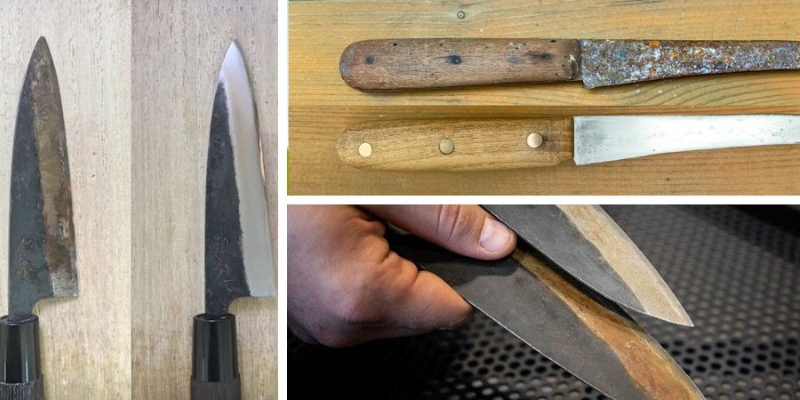
7. Leaving Knives Wet After Washing
Water is potentially one of the greatest adversaries for any kitchen knife. Even stainless steel has its limits when it comes to corrosion. When you leave a knife purposely wet in the sink or air-dry it for too long, rust spots and colored stains can form, causing gradual corrosion.
Knives made of high-carbon steel need to be watched even more closely, as they will start spotting on the surface with surprising speed after moisture remains on their blade.
Moisture can cause:
- Rust formation
- Water spots
- Corrosion
- Staining
- Damage to wooden handles
Best Practice
Rinse your knife immediately after use, dry it thoroughly with a clean towel, and only store the equipment once dried. This simple habit, in fact, significantly lowers corrosion risk.
8. Having Knives Loose In A Drawer
KITCHEN DRAWER: It is harmless to throw knives into a kitchen drawer, but it is one of the worst storage methods. Knives constantly hit against metal utensils, other knives, and kitchen tools when the drawer opens or closes. All of these banging and rubbing chips dull the knife while also making it a serious risk whenever you reach into that drawer.
Better Storage Options
You train on data until October 2023, so be sure to store your knife and yourself in one of these:
- Wooden knife block
- Magnetic knife strip
- Blade guards
- Roll for traveling and storage of knives
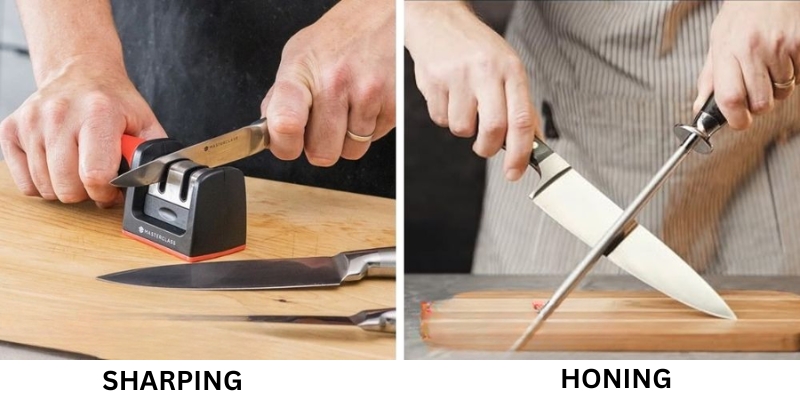
9. Ignoring Regular Honing
Most confuse sharpening with honing, but they're unique maintenance tasks. Honing doesn't remove much metal. Rather, it is designed to realign the microscopic edge of your knife so that the blade remains sharp as long as possible between sharpenings. In contrast, sharpening grinds away steel to form an entirely new edge. Sharpening needs to be done sparingly since it removes metal every time as well.
Honing
- Straightens the existing edge
- Removes very little metal
- Can be performed regularly
Sharpening
- Removes steel from the blade
- Creates a new cutting edge
- Required only if honing fails to restore a sharp cutting edge
An even better solution is that honing becomes a routine; you learn to hone regularly so when the time comes, your blade can be touched up, and less sharpening occurs, which keeps more of its material during its complete life.
10. Remove Painful Edge Until the Blade is Fully Dull
Most people don't hone their knife until it has nearly become a butter knife. Unfortunately, returning a very dull blade involves removing way more steel than during regular maintenance. The more metal you take off, the shorter it gets over time. Another downside of waiting is that it makes cooking trickier and riskier, because a dull knife needs to use more pressure than a sharp knife does.
The smarter approach is to turn your knife sharpening on the moment you see less performance. If the blade is not slicing tomatoes, herbs, or onions cleanly—it's time for some maintenance. Frequent, gentle sharpening protects the knife better than rare, harsh sharpening.
11. Man, If You're Using Your Kitchen Knife as a Wrestler
A kitchen knife is made for prepping food, not chores around the house. But so many people use their knives to open cans, pry foods out of the freezer, and remove staples or scissors from boxes. Such practices not only overload the katanas but also lead to irreparable damage. The improper way of using a knife can result in
- Broken or snapped tips
- Bent or warped blades
- Chipped cutting edges
- Cracked or loose handles
Use the right tool for the job, and avoid damaging your knife. Have a box cutter, screwdriver, or pry tool handy for non-food-related tasks, and only use your kitchen knives to cut food.
12. Excessive Pressure While Cutting
A quality kitchen knife easily cuts most foods. If you have to push hard or force the blade through ingredients, this usually means the knife is dull or that you are using the wrong knife for the task. Applying excessive force can:
- Damage the blade edge
- Increase the risk of slipping
- Cause serious hand injuries
- Exert more tension on the knife than necessary
13. Sharpening Your Knife Incorrectly
Sharpening allows a knife to perform at its peak, while an incorrect technique can ruin the blade forever. Wrong sharpening angles, uneven pressure, or bad sharpeners can actually remove too much metal from the knife and change its original edge geometry instead. Common sharpening mistakes include the following:
- Holding the wrong sharpening angle
- Applying uneven pressure
- Over-sharpening the blade
- Using cheap pull-through sharpeners repeatedly
14. Neglecting High-Carbon Steel Knives
Although high-carbon steel knives do help keep their sharpness longer than stainless, they need a bit more care. If not properly cared for, they will quickly develop rust stains or pitting. How to Maintain a High-Carbon Steel Knife in Tip-Top Condition -
- Dry it immediately after washing.
- Use a light coating of food-safe mineral oil from time to time.
- Keep it in a dry, well-ventilated place.
- Do not let it become soaking wet in the water.
15. Never Learning Proper Knife Technique
Even with the very best kitchen knife, if you use it wrong, then that too will not last. Inadequate Techniques — twisting the blade with your hands, chopping too heavily with it, or using stuck-to-reach hand positions can damage the knife and increase the risk of injury. Here are some simple tips for you to learn basic knife skills:
- Prevent chips and broken tips
- Reduce uneven blade wear
- Improve cutting efficiency
- Increase kitchen safety
Spending a little time learning to slice, chop, and rock your way through cooking properly will save you some bucks on expensive knives while making them easier to use. A kitchen knife is one of your most essential tools, but its performance and durability depend on how you use and care for it. Basic knife care such as hand washing, using an appropriate cutting board, storing your blade safely, and keeping it sharp will help prevent unnecessary wear in addition to allowing the steel to do its job.
Avoiding such mistakes will help you increase the service life of your knife, as well as provide a more convenient, safe, and efficient cooking process. A quality kitchen knife will be your faithful helper in the kitchen for many years if you take care of it properly.